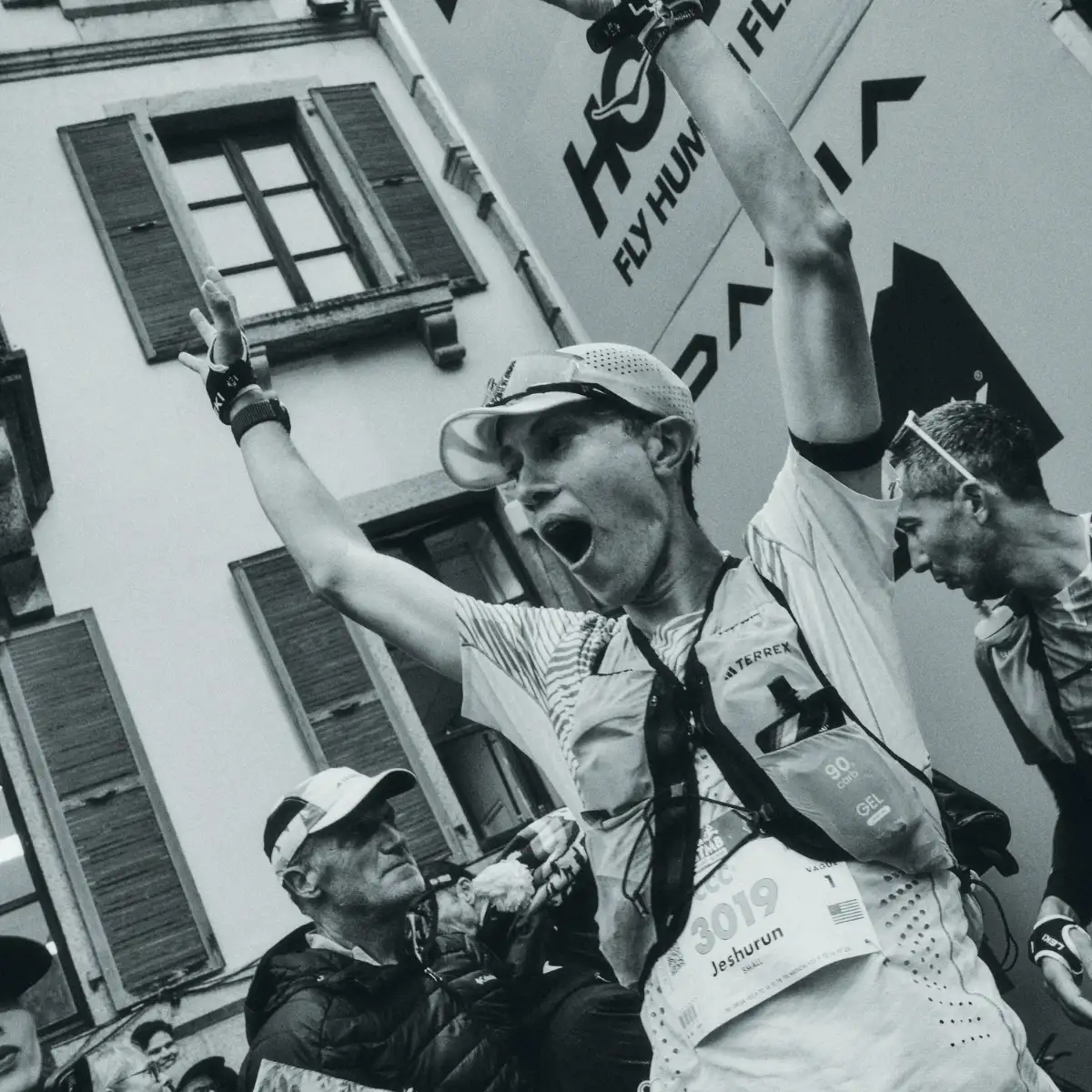
Jeshurun Small

Western States® Endurance Run
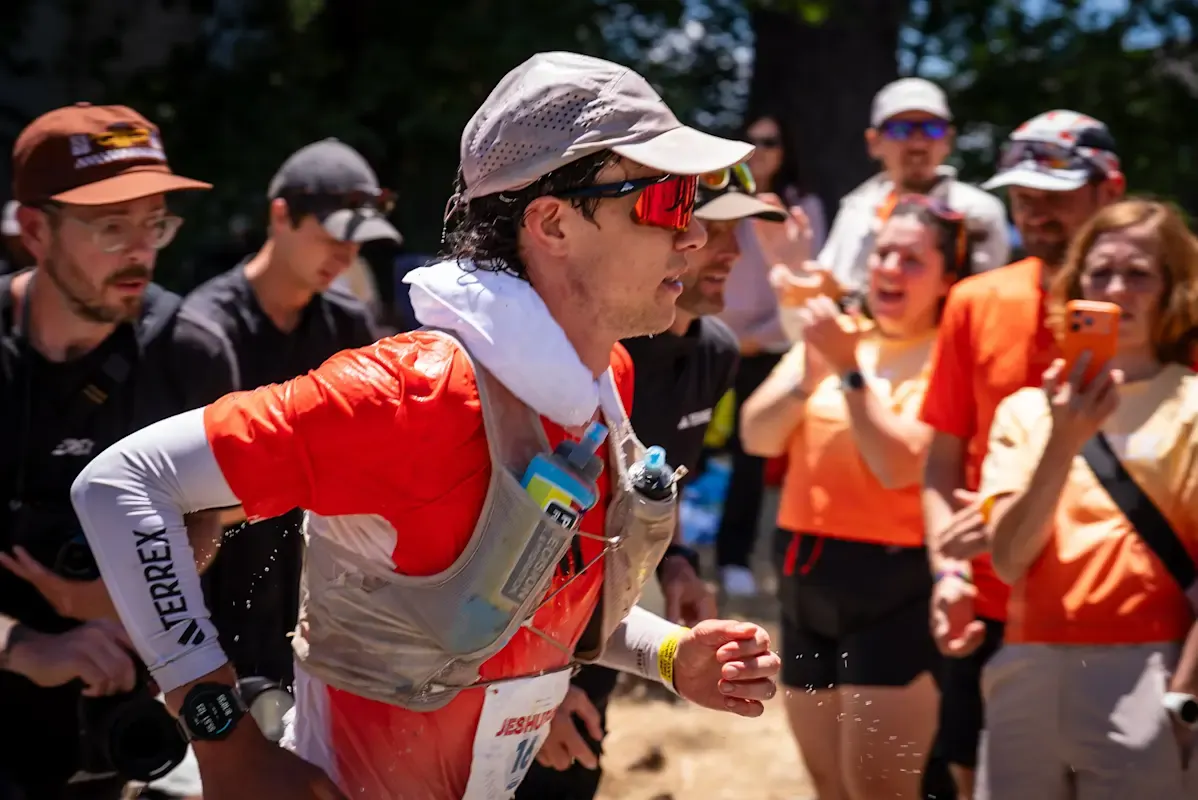
 Olympic Valley, California13th, MPRO
Jeshurun's headline numbers
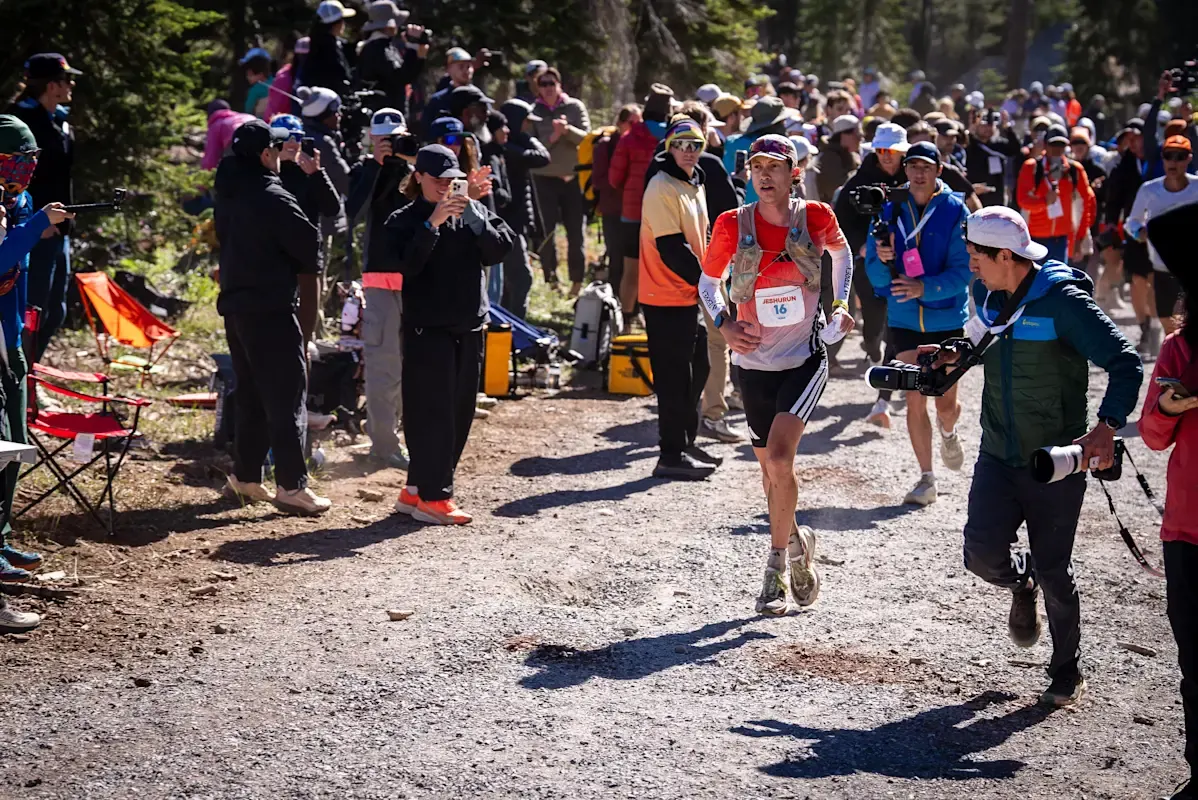
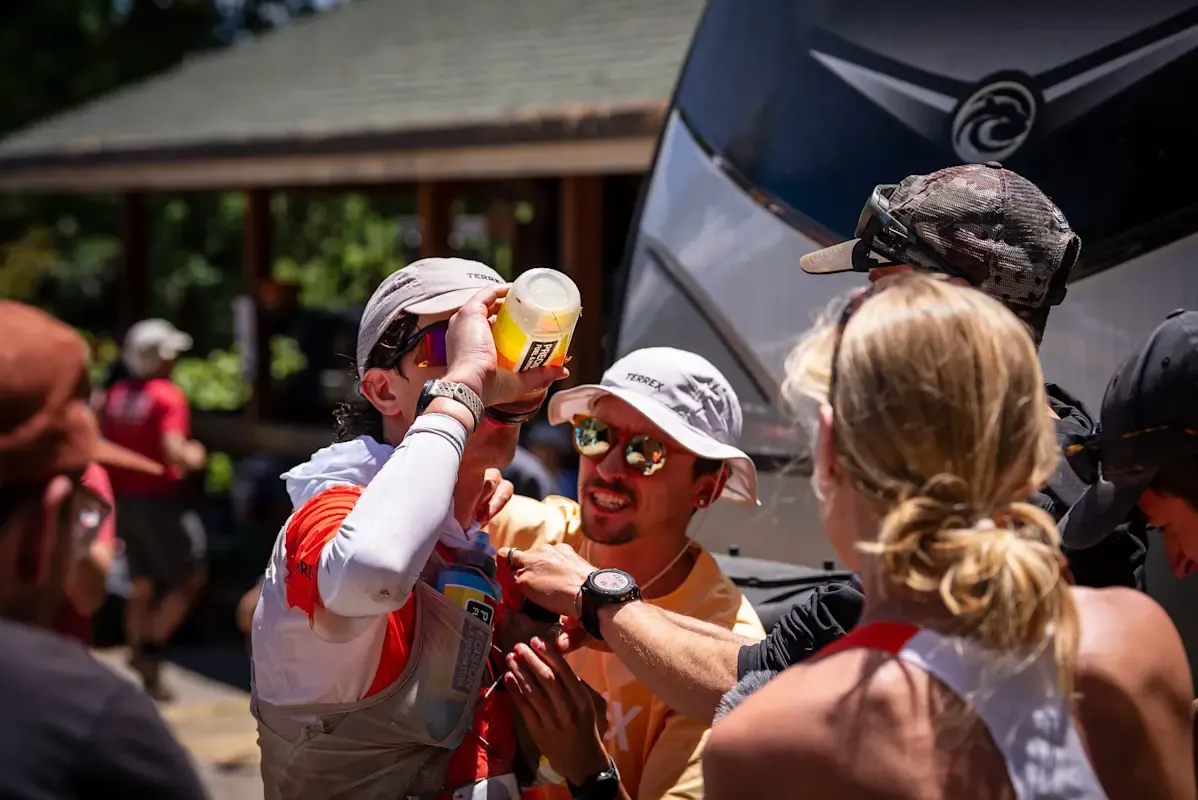
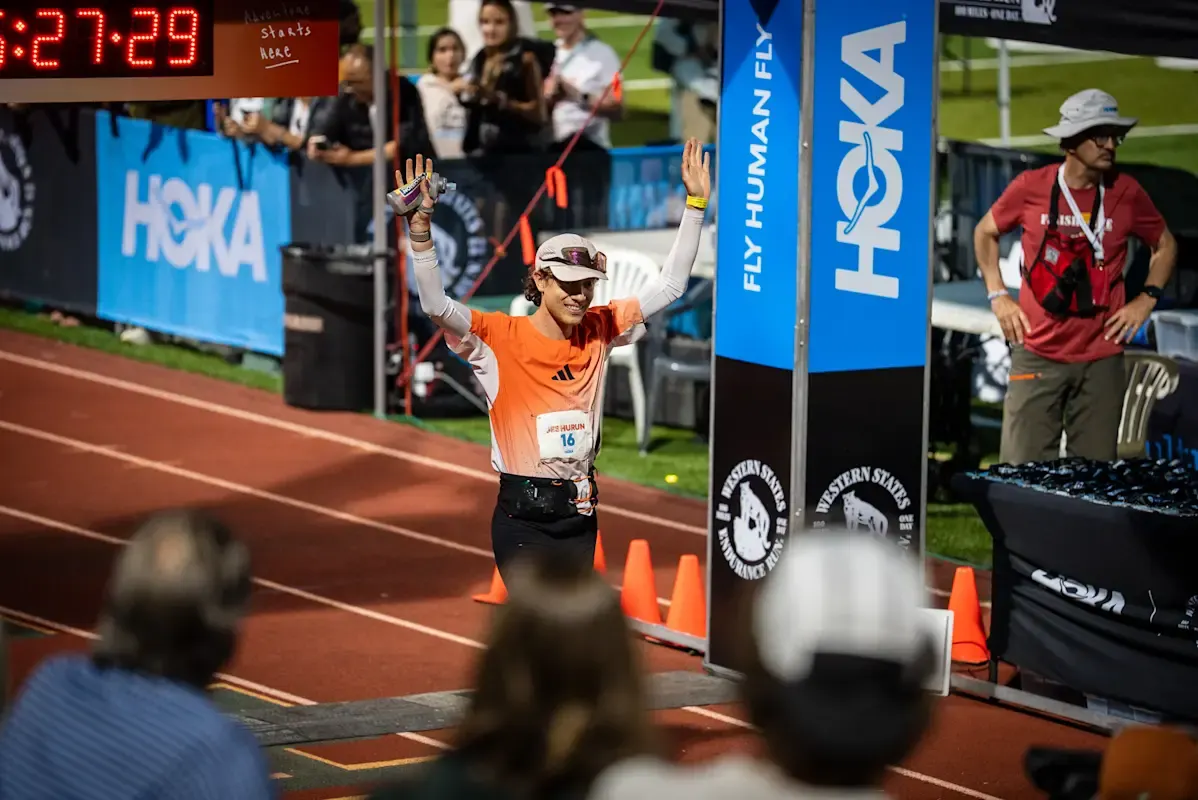
Jeshurun's strategy
Fueling
T - 1-4hrs: Ate a carb rich meal (Low in fat & fibre)
Jeshurun would benefit from taking in a final dose of carb <30 minutes before
"I would’ve liked some more real food out there - the crew had a good supply, as per my plan, but I never asked for it. Reflecting after the race, I wished I had."
Carbohydrate is the main fuel you burn when racing, and Jeshurun's fueling plan centred on consuming PF 90 Gels, backed up by PF Carb & Electrolyte Drink Mix and PF Carb Only Drink Mix, both carried in soft flasks. Early on in the race Jeshurun consumed ~93g/h carbohydrate between Duncan Canyon (~24 miles) and Robinson's Flat (~30 miles), and he peaked at ~109g/h between Dusty Corners (~38 miles) and Michigan Bluff (~56 miles). Both are comfortably clear of the 90g/h+ benchmark now common among elite ultra-runners, and potentially effective in reducing the level of accumulated muscle damage. That early fueling discipline was difficult to sustain; his carb intake dropped to ~54g/h and ~50g/h through the Foresthill (~ 62 miles) to Rucky Chucky (~78 miles), and Rucky Chucky to Pointed Rocks (~94 miles) legs, before falling significantly again as Jeshurun slowed to a walk over the final ~6 miles of the race. By his own admission, he left a lot of product unfinished in his gels and didn't even open his last PF 90 Gel. Moving forward, building in something low-effort for the last quarter of the race, whether that's a diluted drink mix, chews, or a bit of real food, could help with maintaining appetite and motivation to eat when fatigue makes gels hard to face. Interestingly, his GI comfort was excellent all day (8/10, "best I’ve had in a race"), so this wasn't a tolerance issue. On this basis, there's room for Jeshurun to push his carb numbers back up late in the race without adding any digestive risk.
Hydration
Taking on board an appropriate amount of fluid and sodium is essential to maintaining blood volume and supporting the cardiovascular effort needed to perform on race day.
Whilst the absolute amount of sodium and fluid consumed per hour is important, it’s critical to consider these in relation to each other. This is known as 'relative sodium concentration' and it’s expressed in milligrams per litre (mg/L). How much sodium you’re taking in per litre of fluid is more important than the absolute amount taken in per hour.
Jeshurun757mg/L
Jeshurun has been Sweat Tested to dial in his hydration plan
Sweat sodium concentration (mg/L) is largely genetically determined and remains relatively stable. Knowing how salty your sweat is enables you to replace a good proportion of your sweat losses, which can range from 200-2,000mg/L.
Whilst Jeshurun's losses are on the low side, getting his hydration strategy right is still important if he wants to perform at his best.
Learn moreT - 60mins: Drank ~500ml of strong electrolyte drink
"I tried to keep drinking even though the weather was cooler, but I think I could’ve drank even more."
The cool conditions in 2026 (~16°C, ranging 4-23°C) meant that Jeshurun’s sweat rate was lower compared with a typical hot WSER year. He did well to drink just over 11 litres (387 oz) across the race, mostly plain water, alongside over 1.5L of PF Carb & Electrolyte Drink Mix, cola, and small amounts of caffeinated energy drink. Similar to the strategy he implemented at CCC by UTMB in 2025, Jeshurun made sure to take his time at aid stations to consume plenty of fluid; something that we had discussed as part of his plan for this traditionally hot race. His average relative sodium concentration of ~662mg/L (~1,022mg/L if including the sodium bicarbonate he loaded pre-race) was only slightly higher than his sweat sodium concentration. Despite the river crossing at Rucky Chucky aid station causing his Electrolyte Capsules to get wet and consequently making them unusable, this didn’t have a significant impact on his overall sodium intake which was consistent across each section of the race.
Caffeine
Beyond the Three Levers of Performance (carb, sodium and fluid), caffeine is one of only a few substances that is proven to improve performance for most endurance athletes as it can help stave off mental and physical fatigue.
T - 0-4hrs: Had a final hit of caffeine
On the morning of the race, Jeshurun decided against sticking to his plan and avoided taking any caffeine gels during the race. Instead, he leaned on cola and caffeinated energy drinks from aid stations instead (plus a caffeinated drink in his pre-race meal). That worked out at ~120mg of caffeine across the race, about 1.7mg/kg, which is below the 3-6mg/kg range usually associated with a performance benefit. His intake was concentrated through the middle of the race, between Duncan Canyon and Rucky Chucky, and absent in the first and last legs. This wasn’t by design, but simply when Jeshurun decided to consume cola and energy drinks. He would likely have benefitted from continuing to use caffeine later into the race to sustain circulating concentrations in his blood to continue to benefit from this ergogenic aid.
How Jeshurun hit his numbers
Here's everything that Jeshurun ate and drank on the day...
Final thoughts
“After my first Western States, you can call me ‘Jeshuwalk’ it to the finish. My finish wasn't sexy, and sure, it wasn't the debut I had hoped for, but I’m content.”
Jeshurun“Jeshurun's 2026 season, a win at Gorge Waterfalls 100k, a top-10 at Black Canyon, and capped with a 13th-place Men's Open finish on his 100-mile debut at one of the sport's most competitive start lines, points to a runner who's ready to target 100 miles more seriously. As he takes on more races at this distance, the focus shifts to the finer details; sharpening the practical side of his fueling and hydration execution so the plan holds up as well across the closing miles as it does early on. None of this is a reason to change his fundamentals: the early-race execution here was genuinely elite-level. It's about protecting that standard for the length of the whole race.”
 PF&H
PF&HJeshurun's full stats
Data Confidence
We rate each of our case studies from 1-5 based on the level of accuracy, and our confidence in the data.
There is good confidence in the accuracy of the data reported. An athlete feels that the numbers closely reflect what they consumed despite a couple of estimations which may carry some degree of error. The majority of what was consumed is recorded to a high level of specificity (most volumes are known through the use of bottles brands quantities flavours). The numbers are very plausible and align with previous data recordings (if an athlete has collected data previously).