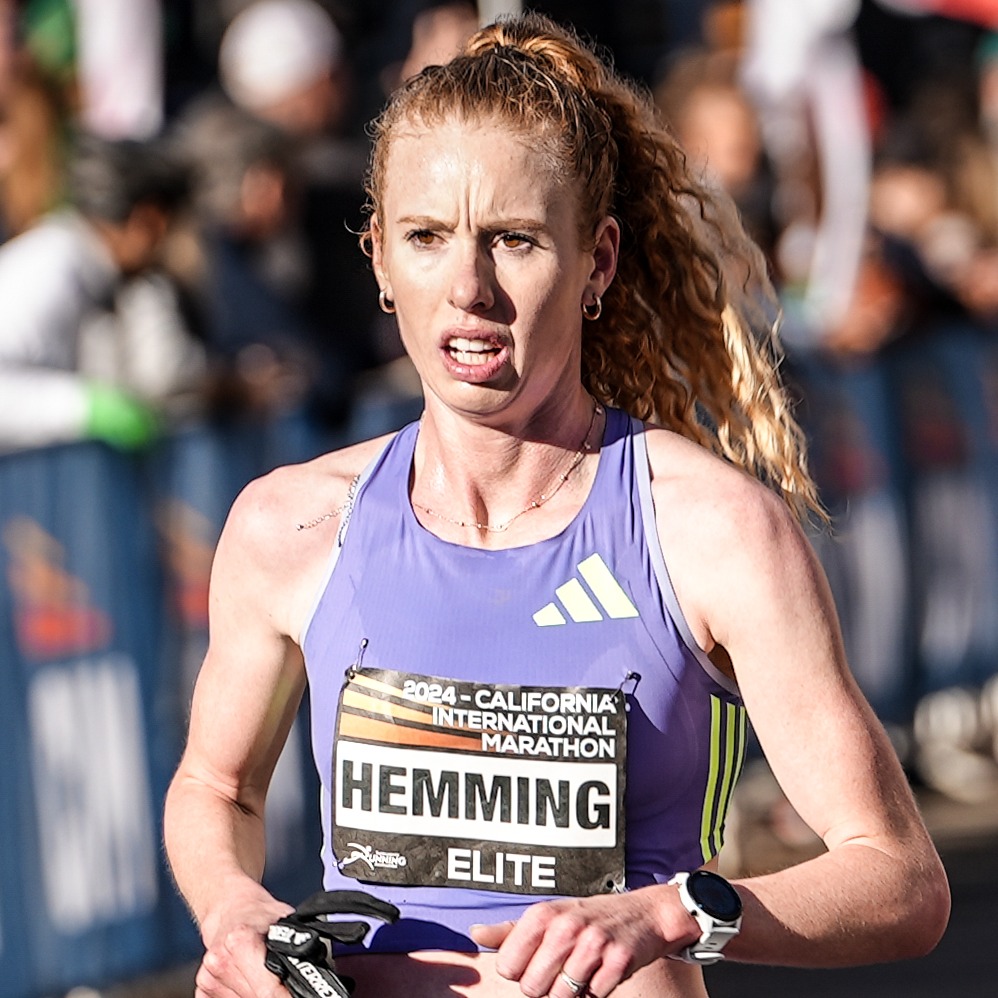
Tabor Hemming

California International Marathon
 SacramentoTop 50, FPRO
Tabor's headline numbers
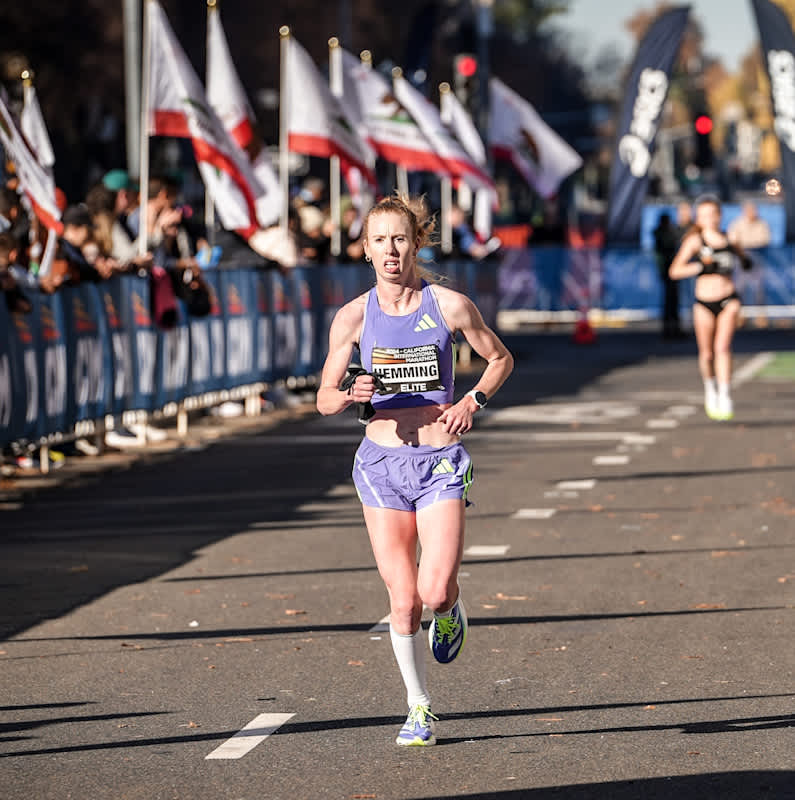
Tabor's strategy
Fueling
T - 1-4hrs: Ate a carb rich meal (Low in fat & fibre)
T - 15mins: Took in a final dose of carb
"From an energy perspective, I had amazing energy levels throughout the race."
Since Tabor was racing in the elite field, she had access to the pro aid stations at every 5km. This meant she could use a relatively simple nutrition strategy, picking up a bottle of fluid and one PF 30 Gel at each aid station. Except for the first stop, where Tabor mentioned she felt a little full, she picked up and consumed a PF 30 Gel every 5km. By doing so she was able to meet the recommendations of 90g/h for carbohydrate intake for her race intensity, a quantity that will have contributed positively to her energy levels throughout. Despite noting some GI issues which required her to take a short bathroom break at ~18 miles, she recognised the importance of continuing to fuel throughout the race. This is a huge positive and showcases a true champion mindset!
Hydration
Taking on board an appropriate amount of fluid and sodium is essential to maintaining blood volume and supporting the cardiovascular effort needed to perform on race day.
Whilst the absolute amount of sodium and fluid consumed per hour is important, it’s critical to consider these in relation to each other. This is known as 'relative sodium concentration' and it’s expressed in milligrams per litre (mg/L). How much sodium you’re taking in per litre of fluid is more important than the absolute amount taken in per hour.
Tabor960mg/L
Tabor has been Sweat Tested to dial in her hydration plan
Sweat sodium concentration (mg/L) is largely genetically determined and remains relatively stable. Knowing how salty your sweat is enables you to replace a good proportion of your sweat losses, which can range from 200-2,000mg/L.
Whilst Tabor's losses are on the moderate side, getting her hydration strategy right is still important if she wants to perform at her best.
Learn moreT - 60mins: Drank ~500ml of strong electrolyte drink
"The hydration plan was perfect, but the execution wasn’t. I probably could have consumed more liquid but was having some stomach issues in the race."
Tabor placed a bottle containing water and PH 1500 (Tablets) at each of the pro aid stations with the aim of consuming small but regular volumes of fluid throughout the race. She noted some ‘sloshing’ in her stomach, which contributed to her GI issues, and as a consequence her overall fluid intake ended up being slightly lower than she would have liked. Given the relatively cool conditions on race day, it’s likely she consumed sufficient fluid and electrolytes to maintain a decent hydration status and replace a good proportion of her sweat losses, especially since she didn’t experience any significant cramping during the race. The only cramping she did experience she attributes to the intensity of her effort and surface of the tarmac.
Caffeine
Beyond the Three Levers of Performance (carb, sodium and fluid), caffeine is one of only a few substances that is proven to improve performance for most endurance athletes as it can help stave off mental and physical fatigue.
T - 0-4hrs: Had a final hit of caffeine
Tabor had a small black coffee a couple of hours before the race, as well as a PF 30 Caffeine Gel in the final 30 minutes ahead of the start. These two doses added up to still be slightly lower than the recommendations for caffeine intake during a marathon distance race, although consuming more may have exacerbated her GI issues. Finding the optimal caffeine strategy for her road races, which are typically of a higher intensity than the ultra-marathons she largely raced in 2024, should be an aim for the coming season to ensure she reaps the benefits the stimulant has to offer.
How Tabor hit her numbers
Here's everything that Tabor ate and drank on the day...
Final thoughts
“I want more! There is more potential there to unlock for sure, and on reflection I need some more training time on the tarmac to help overcome some of the cramping in the quads which was probably linked to the effort level and impact.”
Tabor“The real positive from the race was that Tabor’s energy levels were solid throughout, even though she experienced some GI issues. Moving forward, she plans to spend some time training her gut to tolerate a little more fluid while running at race intensity, as well as dial in her caffeine strategy to figure out the sweet spot of doses.”
 PF&H
PF&HTabor's full stats
Data Confidence
We rate each of our case studies from 1-5 based on the level of accuracy, and our confidence in the data.
There is some confidence in the quantities and brands of products consumed but the data may lack specifics (e.g. volumes specific flavours). A high number of estimations have been made and the room for error is moderate-high. There may also be the possibility that some intake has been grossly over- or under-estimated.