Jason West
IRONMAN 70.3® Los Cabos
 Los Cabos1st, MPRO
Jason's headline numbers
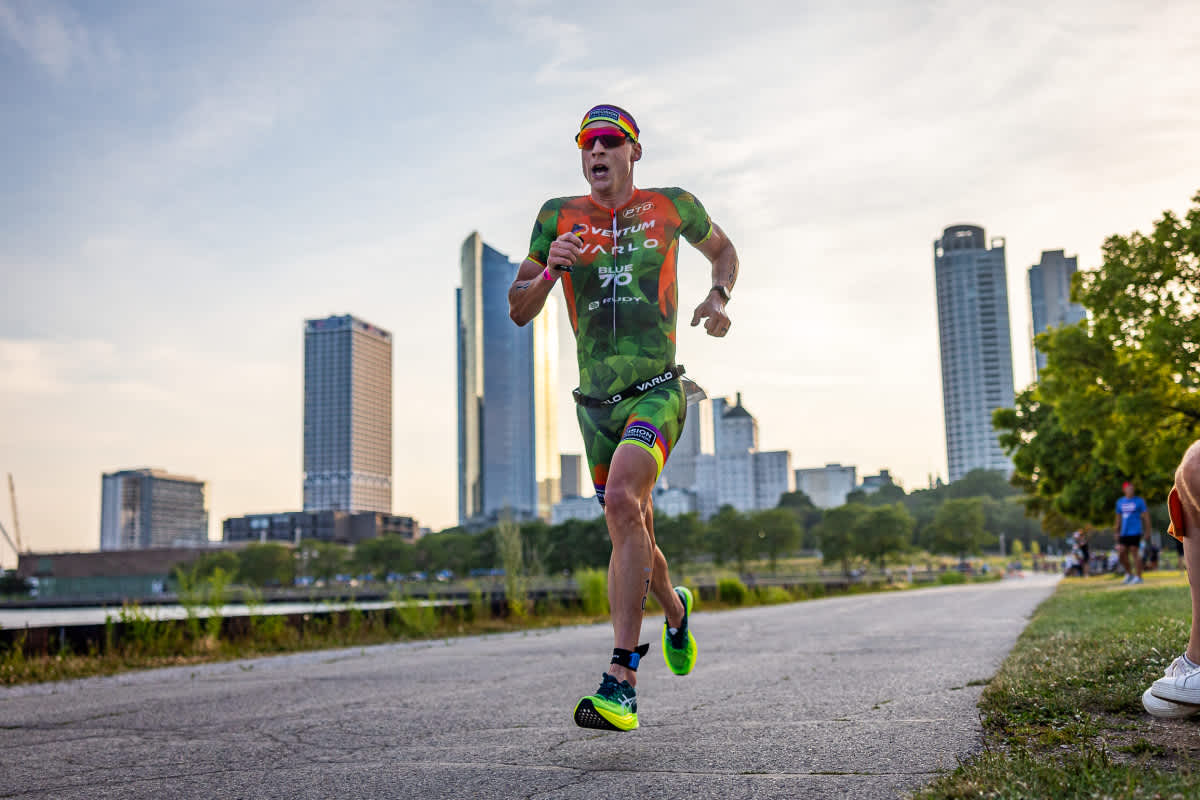
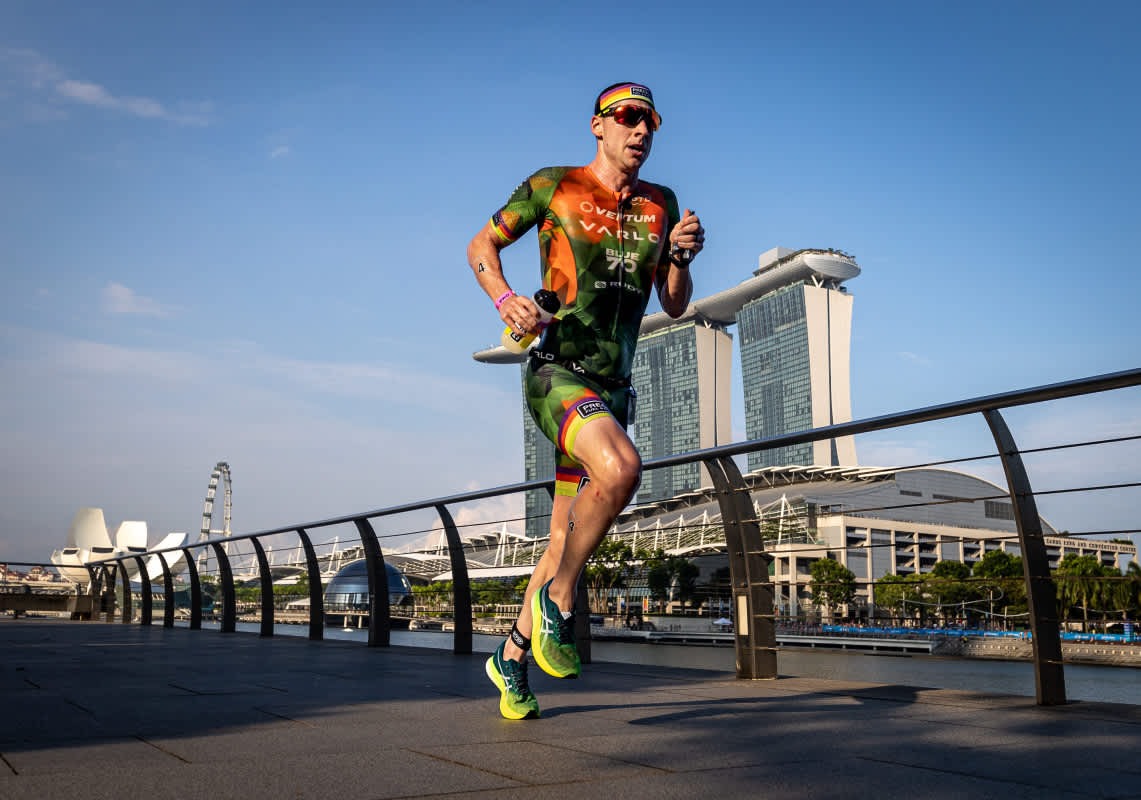
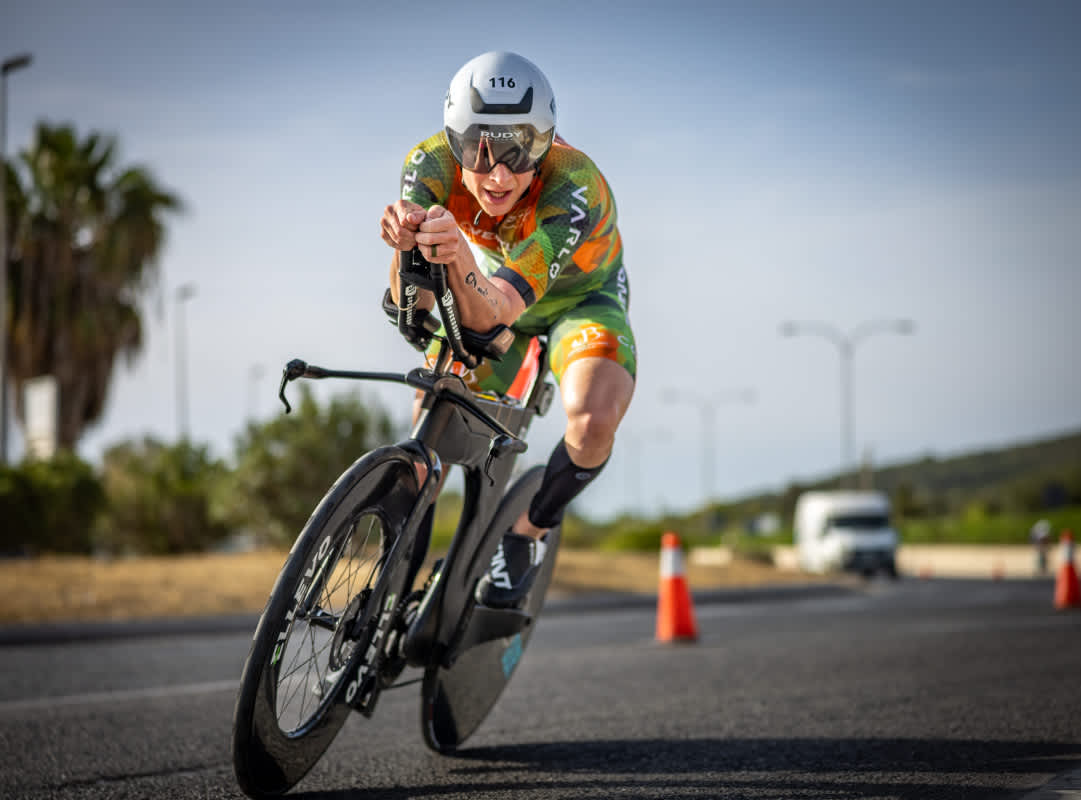
Jason's strategy
Fueling
T - 1-4hrs: Ate a carb rich meal (Low in fat & fibre)
T - 15mins: Took in a final dose of carb
"I never felt any dips in my energy levels, and the only deviation from my pre-race strategy was caused by dropping one of my gels on the run, so I had to pick up some on-course nutrition."
This was only the second IM 70.3-distance race that we’ve crunched Jason’s numbers for, and he’s previously mentioned struggling towards the end of the run in this format, compared to the PTO 100k distance which is typically ~30 minutes shorter. To combat this, Jason maintained the same carb intake from his previous 100k races over this slightly longer format in Los Cabos, and his subjective feedback suggests this helped him maintain energy levels to the finish. Despite dropping his planned PF 30 Gel during the run, Jason made sure he collected a couple of on-course gels to still hit his carb target.
Hydration
Taking on board an appropriate amount of fluid and sodium is essential to maintaining blood volume and supporting the cardiovascular effort needed to perform on race day.
Whilst the absolute amount of sodium and fluid consumed per hour is important, it’s critical to consider these in relation to each other. This is known as 'relative sodium concentration' and it’s expressed in milligrams per litre (mg/L). How much sodium you’re taking in per litre of fluid is more important than the absolute amount taken in per hour.
Jason512mg/L
Jason has been Sweat Tested to dial in his hydration plan
Sweat sodium concentration (mg/L) is largely genetically determined and remains relatively stable. Knowing how salty your sweat is enables you to replace a good proportion of your sweat losses, which can range from 200-2,000mg/L.
Whilst Jason's losses are on the low side, getting his hydration strategy right is still crucial when it's hot and/or humid as his higher sweat rate in these conditions can result in significant net losses over the duration of a race.
Learn moreT - 60mins: Drank ~500ml of strong electrolyte drink
"It got really quite hot towards the end of the run and other athletes suffered as a result. I never had any issues during the race and drank plenty, but I was still very warm at the finish line."
Jason has completed copious sweat rate tests over the years because he sweats *a lot*, so needs to dial his hydration plan according to race-conditions. During this race, he chose to increase the sodium concentration of his drinks to almost twice his sweat sodium concentration. This was based on his understanding that it would help his body retain as much of the fluid he was drinking as possible, and limit his overall sodium depletion. Jason mitigated the extent of this '*oversalting*' by picking up plenty of plain water during the run, whilst carrying his own bottle of PH 1000. His perfect subjective hydration rating suggests he nailed this. The general scientific recommendations would be to reduce his sodium concentration, but considering the extremely warm conditions in Los Cabos and Jason’s high sweat rate, we wouldn’t recommend changing anything.
Caffeine
Beyond the Three Levers of Performance (carb, sodium and fluid), caffeine is one of only a few substances that is proven to improve performance for most endurance athletes as it can help stave off mental and physical fatigue.
T - 0-4hrs: Had a final hit of caffeine
Jason’s staple of using three PF 30 Caffeine Gels across a middle-distance triathlon served him well once again. His overall intake was inflated slightly by the small amount of caffeine in the on-course energy gels, but he still consumed a scientifically optimal amount to reap the maximum benefits.
How Jason hit his numbers
Here's everything that Jason ate and drank on the day...
Final thoughts
“I’m stoked to finish the year off by taking the tape, and heading into off-seaon after a win is always a good feeling. I can’t wait to set even bigger goals for 2024!”
“Jason has proved numerous times throughout 2023 that he’s developed a working formula with his fuel and hydration strategy. He also has the confidence to adapt this strategy when conditions dictate, and this race was a prime example of this. If his run wasn’t so blisteringly quick (3:16 per km / 5:16 per mile!), his gels may stand a better chance of staying on his number belt. So, if anything were to be optimised, it could be trying to tuck his gels in more securely! ”
 PF&H
PF&HJason's full stats
Data Confidence
We rate each of our case studies from 1-5 based on the level of accuracy, and our confidence in the data.
There is an adequate level of accuracy in the data collected and the numbers reported. The athlete manages to recall what they ate and drank including most specifics (brands flavours quantities plausible estimations of volumes). However there are estimations made within the data which affect the overall confidence level in the data reported.