Erin Clark
Western States® 100-Mile Endurance Run
 Olympic Valley, California11th, FPRO
Erin's headline numbers

Erin's strategy
Fueling
T - 1-4hrs: Ate a carb rich meal (Low in fat & fibre)
T - 15mins: Took in a final dose of carb
"My energy levels were great at the start, but not so good after Foresthill (mile 62). I was sick a lot after the half way point which continued until the finish, and I was continuing to eat and drink but my body kept seeming to eject it every 5-10 miles. I was moving okay, but just slower than I wanted. I think there was just no gas in the tank by the end."
Erin approached the Western States 100 with a structured fueling plan to support her body’s energy demands. Over the near ~19-hour race, she averaged just over 80g/h of carbs, hitting the widely accepted benchmark for ultra-endurance performance, and bang on her pre-planned intake. Her strategy centered around gels, taken ~every 30 minutes, alongside some energy drink mixes. Across the full distance, she consumed over 1.5 kilograms of carbohydrate, showing both commitment and discipline in executing her plan, despite some GI issues.
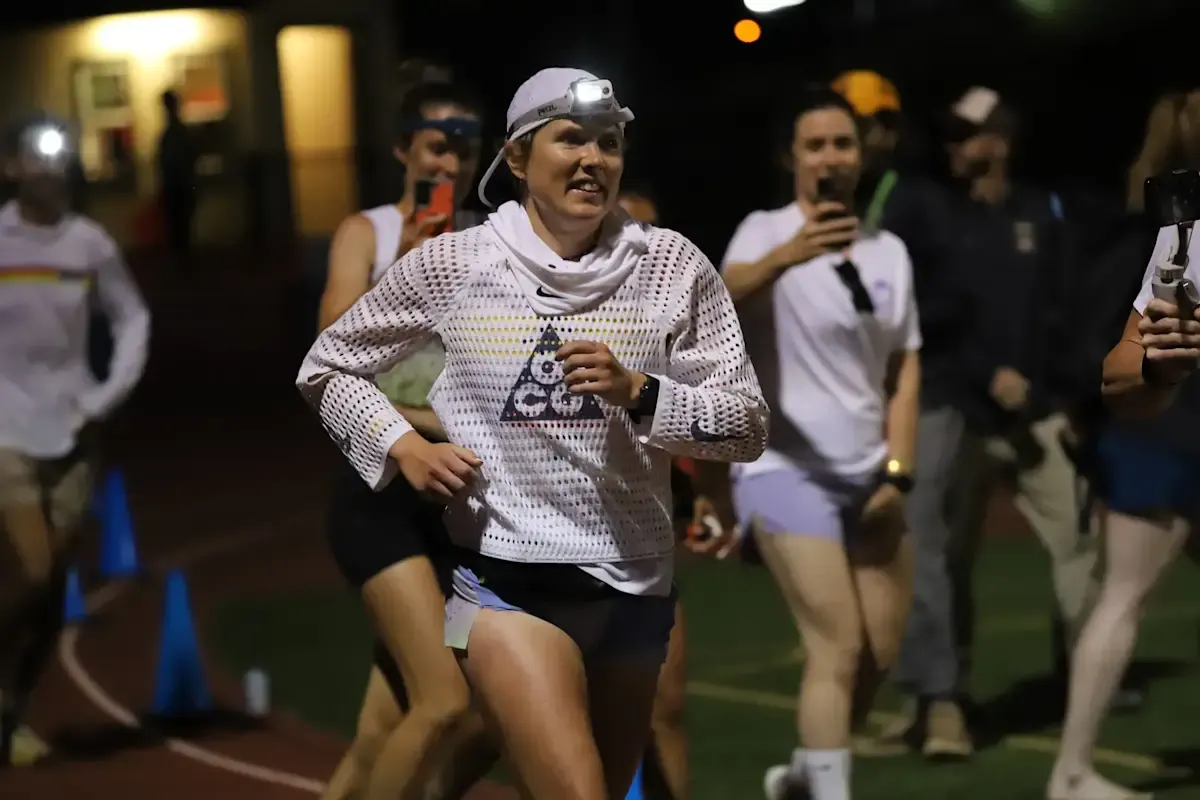
The first half of the race unfolded mostly according to plan. Erin reported feeling strong and moving well through the high country and canyons, likely supported by her consistent energy supply. However, post-Michigan Bluff (roughly the 90km mark), things went downhill. GI issues became apparent, with vomiting episodes every 5-10 miles from this point to the finish. Despite her best efforts to continue eating and drinking, much of what she consumed was likely not being absorbed effectively before it was lost through sickness, leading to a clear energy dip late in the race. This far into the race, Erin’s stores of glycogen (carbohydrate) in the muscles would have been low, even with a suitable carb-load the day before, and so without being able to effectively absorb the ingested carbohydrate (gels or drink mixes), Erin’s energy availability would’ve ultimately been insufficient to support her performance.
The sudden loss of fuel efficiency in the final third of the race could be attributed to several factors. While 80g/h is considered optimal under most conditions, heat stress can reduce gastric emptying and increase gut permeability, making it harder to absorb large amounts of carbohydrate. Studies have shown that gastrointestinal tolerance can diminish significantly in hot weather, particularly when high sodium and carbohydrate loads are consumed simultaneously (i.e., not ‘decoupled’). Despite gut training ahead of the race, it’s likely that some additional practice of this strategy during similar environmental and intensity conditions will be helpful in future to prevent such debilitating sickness. Additionally, if experienced again, easing off her carb intake and drinking some fluids with electrolytes could help Erin get back on track. Despite the challenges, Erin managed to push through with remarkable grit, continuing to fuel even as her body intermittently rejected it and got herself to the famous Placer High School Track finish line.
Hydration
Taking on board an appropriate amount of fluid and sodium is essential to maintaining blood volume and supporting the cardiovascular effort needed to perform on race day.
Whilst the absolute amount of sodium and fluid consumed per hour is important, it’s critical to consider these in relation to each other. This is known as 'relative sodium concentration' and it’s expressed in milligrams per litre (mg/L). How much sodium you’re taking in per litre of fluid is more important than the absolute amount taken in per hour.
Erin1701mg/L
Erin has been Sweat Tested to dial in her hydration plan
Sweat sodium concentration (mg/L) is largely genetically determined and remains relatively stable. Knowing how salty your sweat is enables you to replace a good proportion of your sweat losses, which can range from 200-2,000mg/L.
Given Erin's losses are Very High (1,701mg/L), nailing her hydration strategy becomes especially crucial when it's hot and/or humid.
Learn moreDrinking a strong electrolyte drink before the race could have helped Erin start optimally hydrated
"I had no cramping during the race and peed a couple of times, no more. I think I was drinking the right quantity of fluid throughout but I may have overshot my sodium in the early part of the race (from the start to Dusty Corners, mile 38) which may have led to some of my GI issues. "
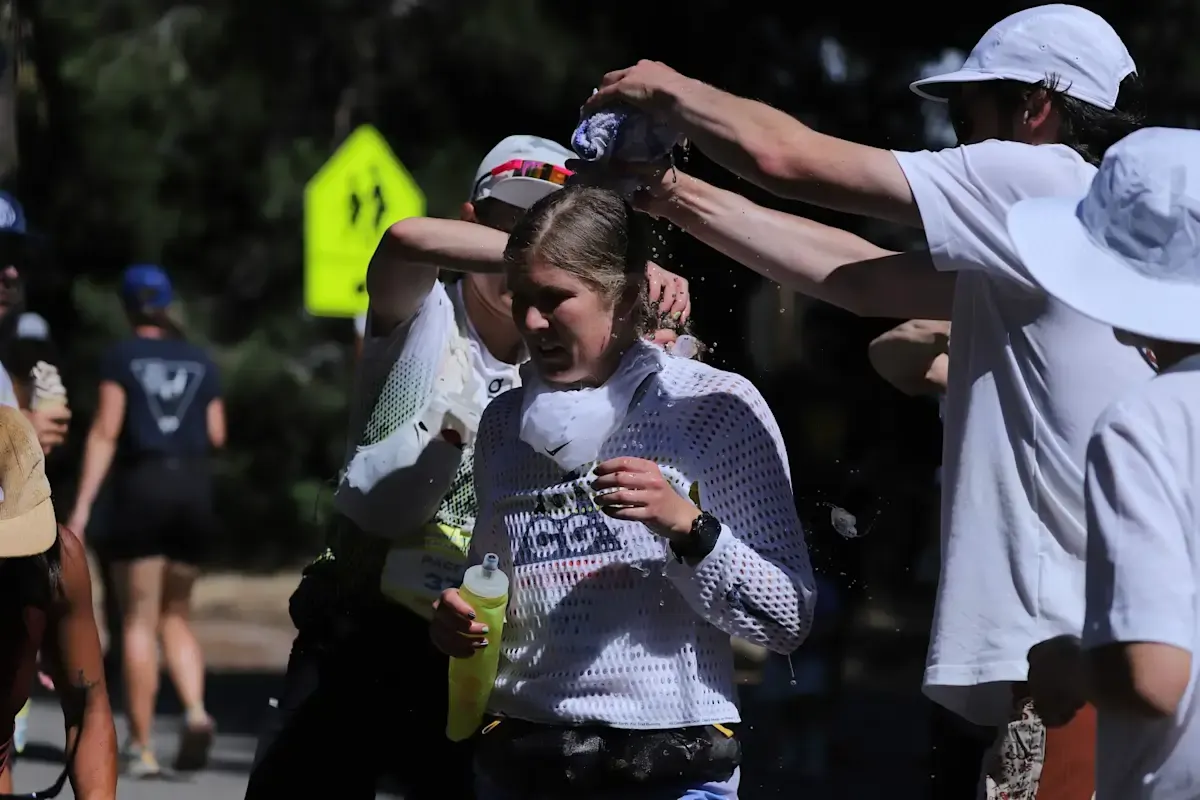
When it comes to hydration, Erin sits in a unique category of athletes, those with exceptionally high sweat sodium losses (>1500mg/L). In a race like Western States, with a wide range of conditions and temperatures peaking above 30°C (86°F), managing fluid and sodium intake becomes imperative to maintaining performance. Erin’s strategy incorporated a variety of electrolyte products through drinks to match her losses.
Over the full race, she consumed ~14.6 litres of fluid and over 14,000mg of sodium. This resulted in an average sodium concentration of about 970mg/L, a lot lower than her known sweat sodium losses. Despite this, she reported no cramping across the race and subjectively stayed on top of hydration. However, looking at the early stages more closely, it appears she may have spaced her intake out inconsistently. Between the start and Dusty Corners (roughly the first 6.5 hours), her sodium concentration ranged from 1300 to 1760mg/L (closer to her known losses). From Robinson Flat (~48km) onwards, the relative sodium concentration of Erin’s bottles until the finish remained under 1000mg/L. It’s likely that alongside a high sweat rate due to the heat and her high exercise intensity, Erin would have accumulated a significant deficit during the race.
Though she reported peeing a couple of times across the ~18 hour racing duration, it’s likely she experienced some dehydration late on from the reduction in sodium and expected difference between intake of fluid and actual sweat loss, but the fact that she avoided cramping and felt her fluid intake was generally “about right” shows her strategy was fundamentally appropriate. Erin’s race illustrates how important it is to plan and focus on both *timing* and *total* sodium intake so that losses are managed and as a result of better absorption, gut comfort is maintained.
Caffeine
Beyond the Three Levers of Performance (carb, sodium and fluid), caffeine is one of only a few substances that is proven to improve performance for most endurance athletes as it can help stave off mental and physical fatigue.
Consuming caffeine in the hours before the start may have increased perceived energy levels
Caffeine has been shown to reduce perceived exertion, enhance mental focus, and improve performance in prolonged efforts. Erin kept her caffeine intake conservative and controlled at ~4mg/kg total; well within the optimal performance range. She started her race day with a cup of black coffee, and then layered in three caffeinated gels spaced strategically throughout the race: one between Robinson Flat to Dusty Corners (50-61km), another between Dusty Corners and Michigan Bluff (61-90km), and the final one around Foresthill (~100km).
This approach worked well at the start, providing some stimulation without excessive spikes in circulating caffeine levels. Erin didn’t experience any jitteriness or caffeine-related crashes, and her use was timed to support alertness through the key middle miles of the race. Interestingly, she didn’t load up on caffeine late in the event, despite struggling with energy levels in the closing hours. Given her prevalent stomach issues and sickness this was likely a sensible strategy. For future races, small amounts of caffeine in the final 4-5 hours (assuming well-tolerated) might provide an additional boost to counteract the deep fatigue of the final miles.
How Erin hit her numbers
Here's everything that Erin ate and drank on the day...
Final thoughts
“I didn't have the day I wanted out there, nor the day I think I'm capable of. However, I think I did the best that I could with how I was feeling and continued to battle throughout the race. I also had a pretty rocky training block coming into this race, so I am generally proud of how I handled that and the mid-race issues and came away with a decent finish, even if it wasn't what I wanted out there.”
“Erin’s performance at the Western States 100 may not have been what she wanted, but it showcased her toughness, self-awareness, and ability to adapt under pressure. Even with vomiting, energy dips, and a tough training block behind her, she kept moving, kept fueling and drinking, and earned an impressive 11th-place finish in a world-class field. With minor adjustments, especially around sodium concentration throughout, there’s no doubt Erin is capable of an even bigger day in the future.”
 PF&H
PF&HErin's full stats
Data Confidence
We rate each of our case studies from 1-5 based on the level of accuracy, and our confidence in the data.
There is some confidence in the quantities and brands of products consumed but the data may lack specifics (e.g. volumes specific flavours). A high number of estimations have been made and the room for error is moderate-high. There may also be the possibility that some intake has been grossly over- or under-estimated.