
Jana's headline numbers
Jana's strategy
Fueling
T - 1-4hrs: Ate a carb rich meal (Low in fat & fibre)
T - 15mins: Took in a final dose of carb
"My energy levels were absolutely amazing until the last hour of the run. At that point, I felt like I couldn’t take any more gels, so my energy levels dropped. Luckily I had a healthy lead at this point but I would have liked to keep the pace I was on course for."
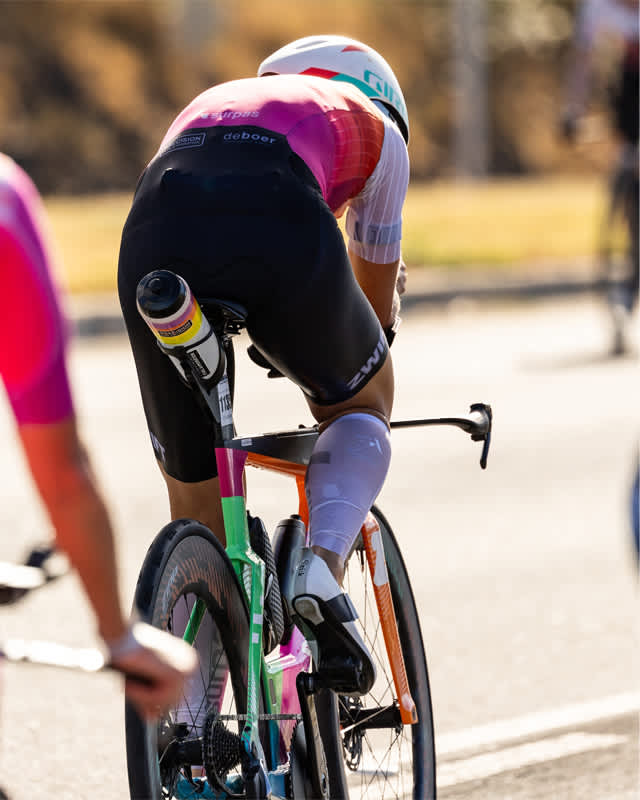
Jana has made significant changes to her fueling strategy over the years, using trial and error to try and avoid the sickness and nausea that plagued her during previous IM distance races. In Kona, she rotated through various carb sources, aiming for approximately 120g/h on the bike and 90g/h on the run. Her bike energy levels were spot on, allowing her to hit all of her pre-race performance targets, including posting the fastest amateur bike split, and 10th fastest amongst the professionals! This held up until about 2.5 hours into the run when her stomach ‘dropped’, prompting her to stop taking in fuel for fear of vomiting. Her gut training in the lead up to this race was extensive and therefore unlikely a cause, but her deteriorating hydration strategy may have slowed the absorption of carbohydrates, causing her stomach to shut down. However, the *front-loading* of ~110g/h on the bike helped her to power through the final hour despite feeling like she was *‘running on fumes’*.
Hydration
Taking on board an appropriate amount of fluid and sodium is essential to maintaining blood volume and supporting the cardiovascular effort needed to perform on race day.
Whilst the absolute amount of sodium and fluid consumed per hour is important, it’s critical to consider these in relation to each other. This is known as 'relative sodium concentration' and it’s expressed in milligrams per litre (mg/L). How much sodium you’re taking in per litre of fluid is more important than the absolute amount taken in per hour.
Jana819mg/L
Jana has been Sweat Tested to dial in her hydration plan
Sweat sodium concentration (mg/L) is largely genetically determined and remains relatively stable. Knowing how salty your sweat is enables you to replace a good proportion of your sweat losses, which can range from 200-2,000mg/L.
Whilst Jana's losses are on the moderate side, getting her hydration strategy right is still crucial when it's hot and/or humid as her higher sweat rate in these conditions can result in significant net losses over the duration of a race.
Learn moreT - 60mins: Drank ~500ml of strong electrolyte drink
"I would rate my strategy on the bike 10 out of 10 as I stuck to the plan completely. On the run I’d rate it a 7/10 as I deviated from the plan during the final section of the marathon when I couldn't stomach much."
After extensive heat preparation in The Woodlands, Texas, Jana was well-acquainted with her sweat rate and sodium losses in hot and humid conditions. Surprisingly, the slightly ‘cooler’ than expected conditions in Kona allowed for a more relaxed hydration plan as sweat rates were lower than usual. She rated her hydration as a perfect 10 on the bike, consuming ~1.3L per hour. This set her up well for a scorching run (~29℃ / 84℉) where the cooling effects of the wind were strangely missed, and core temperatures soared. However, her average hourly fluid intake dropped significantly (~64% less) from bike-to-run, which may have contributed to her feeling of nausea as she gradually became more dehydrated and it became more difficult for her gut to absorb carbohydrates. In the future, maintaining a slightly higher fluid intake could help prevent or delay this sickness until later in or after the race, thus preserving her performance.
Caffeine
Beyond the Three Levers of Performance (carb, sodium and fluid), caffeine is one of only a few substances that is proven to improve performance for most endurance athletes as it can help stave off mental and physical fatigue.
Consuming caffeine in the hours before the start may have increased perceived energy levels
As a regular coffee drinker, Jana’s decided to leverage caffeine as a performance enhancer. She opted for the lower end of the recommended dose but could potentially increase her intake by replacing her pre-race PF 30 Gel with a PF 30 Caffeine Gel. This adjustment would provide a steady flow of caffeine into her bloodstream from the start of the race, extending the duration of which she reaped the ergogenic aids of the stimulant.
How Jana hit her numbers
Here's everything that Jana ate and drank on the day...
Final thoughts
“I couldn’t give it a perfect 10 (out of 10), because although I won (which is amazing!), the last hour bothers me and I would have liked it to be perfect. I wouldn’t change anything fuel-wise, the heat likely played a part in feeling bad, but the nausea scared me and I just stopped taking anything, so subsequently had to nurse myself over the finish line.”
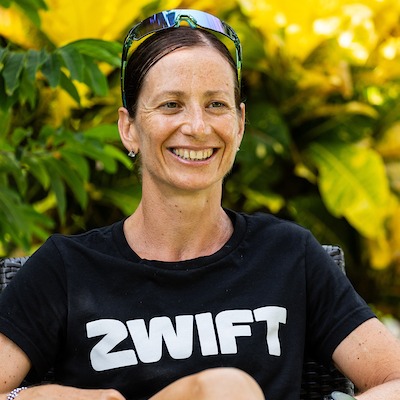
Jana“Jana claimed her third consecutive age-group IRONMAN World Championship title, boasting the fastest amateur bike-split, outpacing all but 9 professional women! She was also the first finisher from the 2023 Zwift Tri Academy. Jana’s meticulous fueling and hydration strategy during the bike leg allowed her to break away from the competition, providing a buffer when challenges arose in the final hour of the run. Slightly increasing her fluid intake during the run may have prevented the onset of nausea. Additionally, incorporating a pre-race Caffeine Gel could further optimise her performance.”
 PF&H
PF&HJana's full stats
Data Confidence
We rate each of our case studies from 1-5 based on the level of accuracy, and our confidence in the data.
There is some confidence in the quantities and brands of products consumed but the data may lack specifics (e.g. volumes specific flavours). A high number of estimations have been made and the room for error is moderate-high. There may also be the possibility that some intake has been grossly over- or under-estimated.