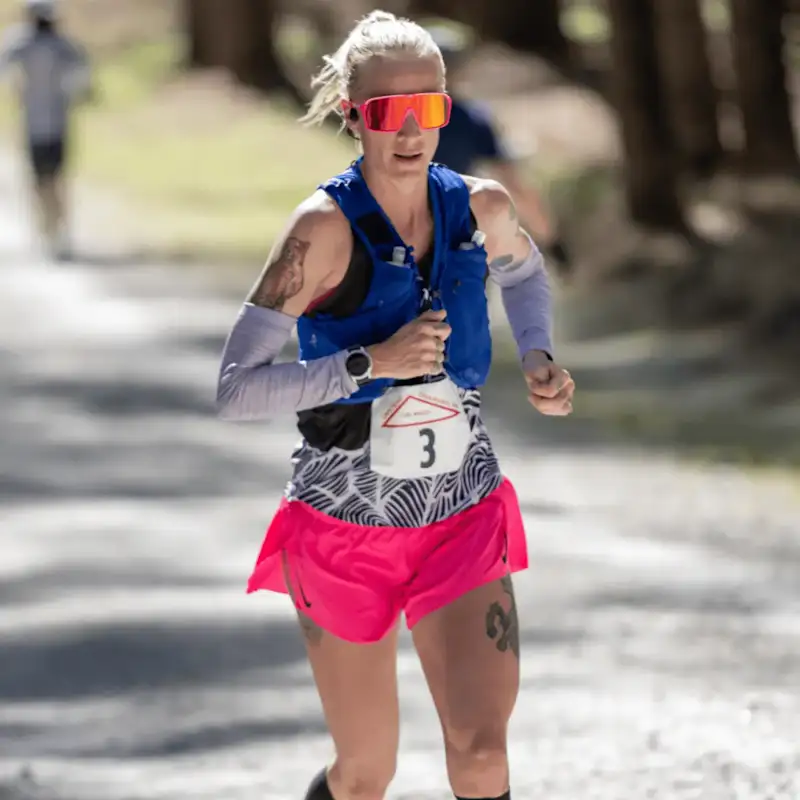
Devon Yanko


Tarawera 100

Devon's headline numbers
Devon's strategy
Fueling
Carbohydrate is the main fuel you burn when racing. Failing to fuel properly is a leading cause of underperformance in longer races.
Devon fueled her race morning with a PF 60 Chew Bar and a coffee, keeping things simple and familiar ahead of the early start (04:00am). Before future races of this duration, she could consider topping this up with some additional carbohydrates, such as a bowl of rice or a banana, to get closer to the recommended 1-4g/kg of pre-race carbohydrate and build up her fuel stores before the gun.
During the race, Devon averaged ~67g of carbohydrate per hour across the nearly 20-hour effort, sitting slightly below the recommended range for an ultra-marathon of this duration. She relied on a combination of PF 300 Flow Gel, PF 90 Gels and PF 30 Caffeine Gels, supplemented with cola and some caffeinated energy drinks, whilst eating no solid food throughout. This near-exclusive sports nutrition strategy clearly suited her, and further supports the notion that elite athletes often don’t ‘feel the need’ to include any ‘real foods’ even in ultra-endurance races like Tarawera. Devon’s subjective feedback post-race supports this as she reported an 8.5/10 energy rating and had no stomach issues across the whole race. To optimise her strategy going forwards, she could look to increase her intake towards the ~75-90g/h recommendations, particularly through the middle portion of the race, to provide a bigger energy buffer when fatigue accumulates in the closing hours.
Hydration
Taking on board an appropriate amount of fluid and sodium is essential to maintaining blood volume and supporting the cardiovascular effort needed to perform on race day.
Whilst the absolute amount of sodium and fluid consumed per hour is important, it’s critical to consider these in relation to each other. This is known as 'relative sodium concentration' and it’s expressed in milligrams per litre (mg/L). How much sodium you’re taking in per litre of fluid is more important than the absolute amount taken in per hour.
With the temperature at ~22℃ (72F) and humidity at ~95% all day were conditions that significantly increased Devon’s sweat losses and made effective hydration even more important. Devon averaged ~686ml/h of fluid across the 20 hours, which is a sensible volume for an ultra of this duration given the need to balance hydration with GI comfort over such a long period. She carried two 500ml soft flasks, refilling or replacing them at each of the nine uncrewed and five crewed aid stations along the way.
For sodium, Devon used a combination of Electrolyte Capsules alongside her plain water (two capsules per 500ml flask) and some PH 1500 at crewed aid stations, giving her an average relative sodium concentration of ~967mg/L. Without knowledge of her individual sweat sodium concentration from a Sweat Test, we’d still consider this a proactive approach. Devon recognised post-race that she would have benefited from more electrolyte drink, particularly in the humid opening hours.
Caffeine
Beyond the Three Levers of Performance (carb, sodium and fluid), caffeine is one of only a few substances that is proven to improve performance for most endurance athletes as it can help stave off mental and physical fatigue.
Devon’s caffeine intake came from her pre-race coffee, two PF 30 Caffeine Gels, cola and two energy drinks, totalling ~7.17mg/kg across the race. This is slightly above the general guideline of 3-6mg/kg, but is a suitable level given the extended duration of the event. For most people, caffeine has a half-life of ~4-5 hours, so spreading doses throughout a 20-hour race is important to maintain an optimal concentration in the blood so it can enhance focus, alertness and perceived energy levels.
How Devon hit her numbers
Here's everything that Devon ate and drank on the day...
Devon's weapons of choice
Final thoughts
Devon PF&H
PF&HDevon's full stats
Data Confidence?
There is an adequate level of accuracy in the data collected and the numbers reported. The athlete manages to recall what they ate and drank including most specifics (brands flavours quantities plausible estimations of volumes). However there are estimations made within the data which affect the overall confidence level in the data reported.