
Jamie's headline numbers
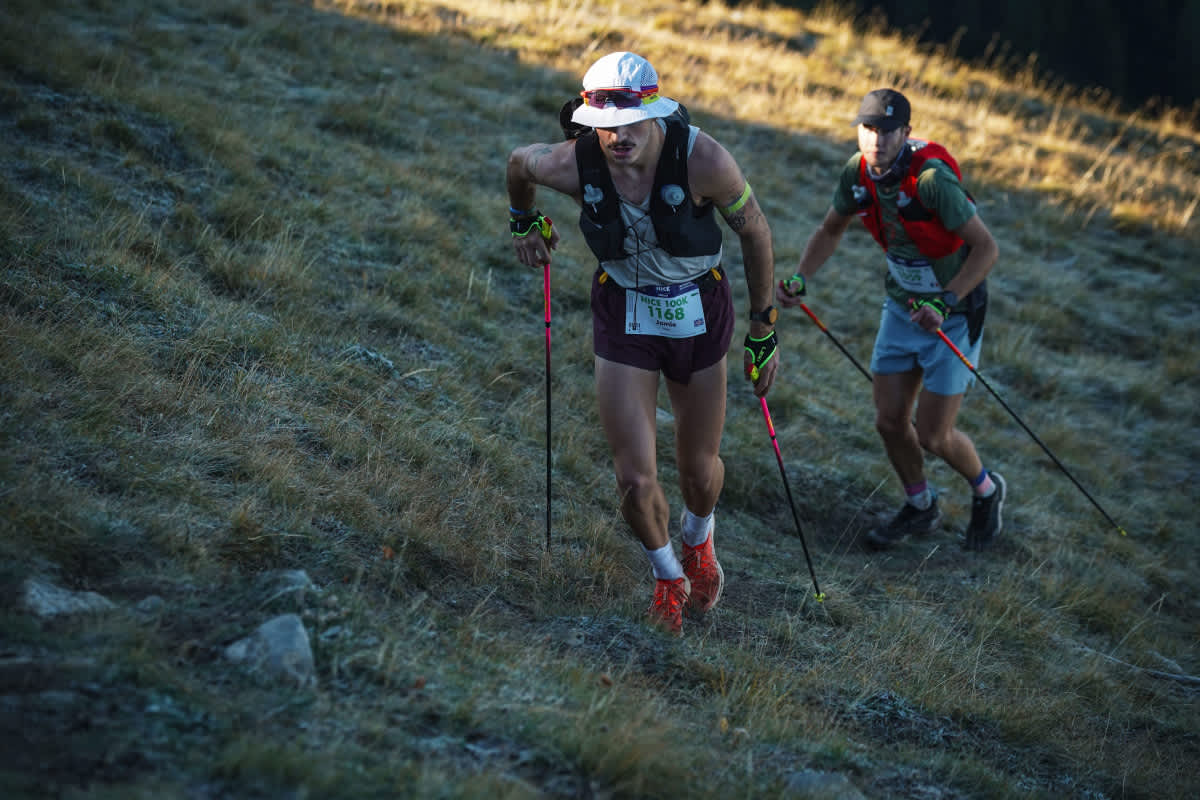

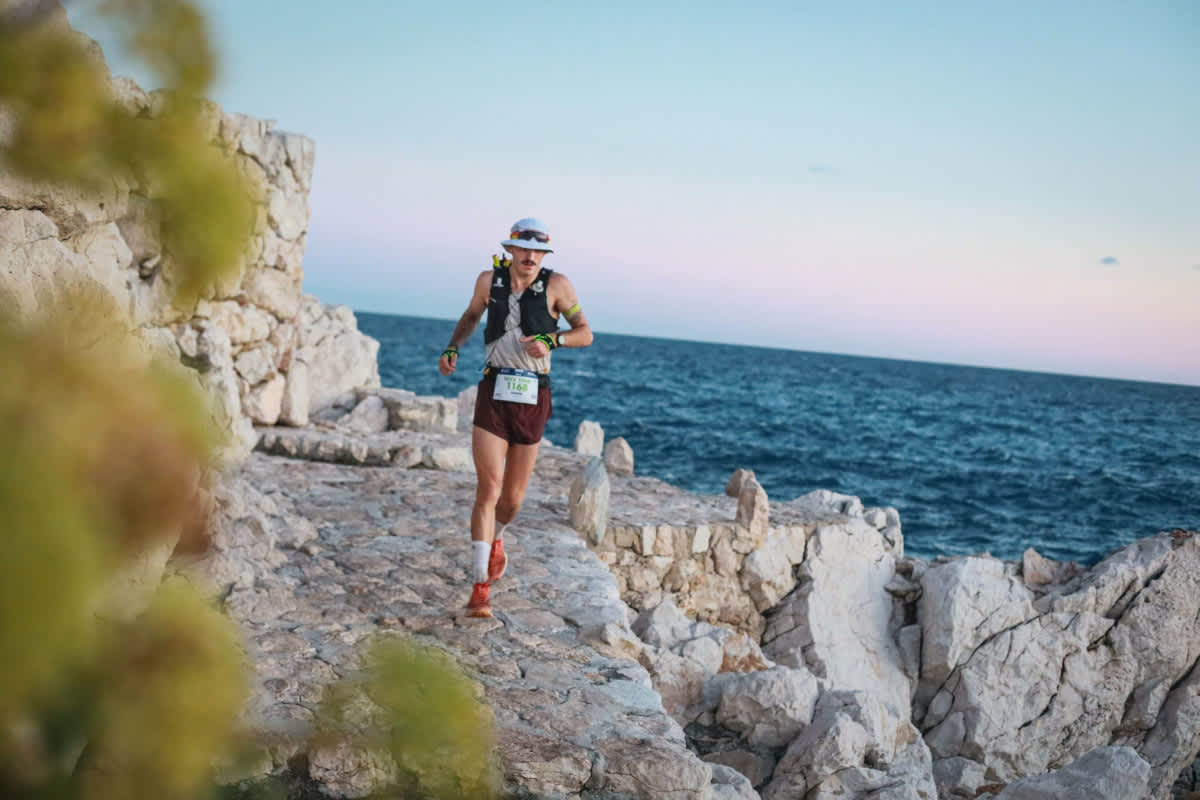
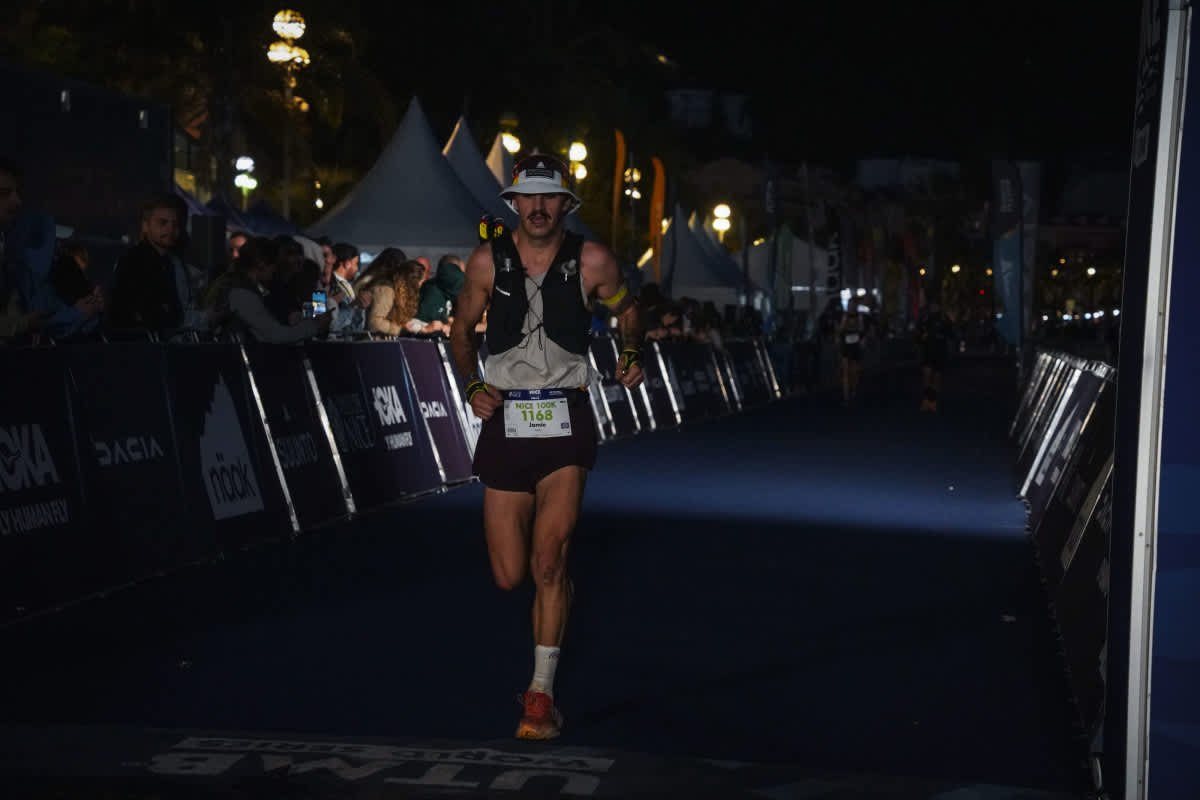
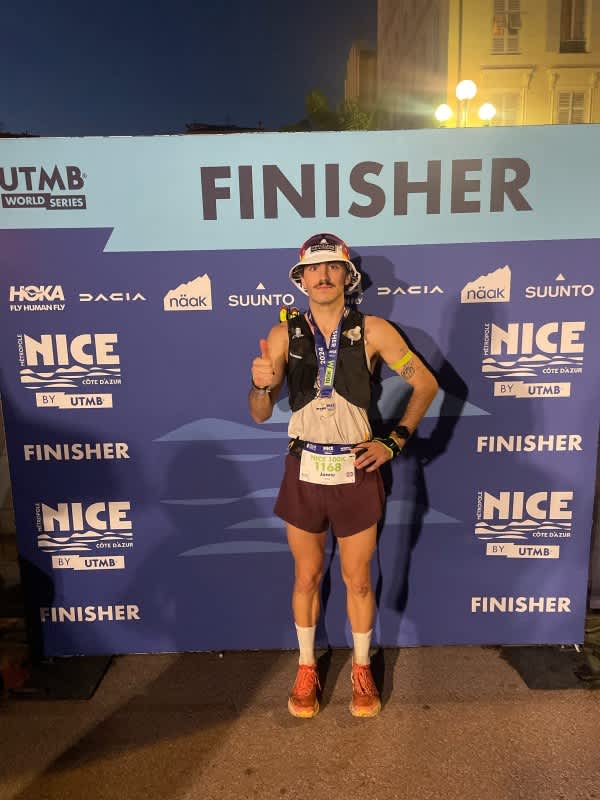
Jamie's strategy
Fueling
T - 1-4hrs: Ate a carb rich meal (Low in fat & fibre)
T - 15mins: Took in a final dose of carb
"Overall my energy levels were really good. I hit a significant low point mid way through the race, and looking back I should probably have had a couple of caffeine gels (but I hadn’t practised using them much in training). This was also my longest ever race and I had no GI issues!"
Jamie has been using the PF 300 Flow Gel as part of his strategy for training and racing as he’s found they’re an efficient way to hit his hourly carbohydrate targets, with less “faff” (compared to opening packets of smaller gels) involved. Based on his estimated finish time and intensity, he settled on an hourly target of 90g/h+ for his first 100km race, which he knew he could nail with four Flow Gels. Consistently, new scientific papers are identifying the benefits of high carbohydrate intakes during exercise to support performance through increasing *exogenous carbohydrate oxidation rates*. Simply put, ingesting carbohydrates above 90g/h encourages more of the exogenous (external) carbohydrates to be utilised during exercise. The ~99 grams of carb he consumed for thirteen and a half hours would’ve no doubt supported Jamie’s energy levels and performance throughout the race, ensuring that his muscles were consistently supplied with glucose. In turn, this would’ve spared *some* of his endogenous (internal) glycogen stores for later on in the race, where fatigue increases and the chance for a decrease in fueling becomes more of a concern.
Hydration
Taking on board an appropriate amount of fluid and sodium is essential to maintaining blood volume and supporting the cardiovascular effort needed to perform on race day.
Whilst the absolute amount of sodium and fluid consumed per hour is important, it’s critical to consider these in relation to each other. This is known as 'relative sodium concentration' and it’s expressed in milligrams per litre (mg/L). How much sodium you’re taking in per litre of fluid is more important than the absolute amount taken in per hour.
Jamie1214mg/L
Jamie has been Sweat Tested to dial in his hydration plan
Sweat sodium concentration (mg/L) is largely genetically determined and remains relatively stable. Knowing how salty your sweat is enables you to replace a good proportion of your sweat losses, which can range from 200-2,000mg/L.
Given Jamie's losses are High (1,214mg/L), nailing his hydration strategy remains important, even when it's Mild.
Learn moreT - 60mins: Drank ~500ml of strong electrolyte drink
"I was a bit overwhelmed with the racing and my focus drifted occasionally away from hydration. Maybe having a crew would’ve helped with structure but overall I am really pleased with my hydration, especially in the hotter parts of the day."
Jamie has unfortunately suffered from cramping during his training and racing over the years, and since having a Sweat Test has increased the relative sodium concentration of the fluid he takes on board. With some practice of carrying both flasks and bottles, he decided that the best strategy was to start with two soft flasks of PH 1500 and to refill these throughout with water or more PH 1500 by carrying a tube with him to use at the aid stations. He sipped on his soft flasks regularly throughout and listened to his body to avoid any cramping or the dreaded flavour fatigue, whilst still mitigating against his higher than average sweat fluid *and* sodium losses.
Caffeine
Beyond the Three Levers of Performance (carb, sodium and fluid), caffeine is one of only a few substances that is proven to improve performance for most endurance athletes as it can help stave off mental and physical fatigue.
T - 0-4hrs: Had a final hit of caffeine
Jamie is aware of the benefits associated with caffeine, but similarly to his previous race at the Suffolk 50km, he chose not to include it within his strategy as he’s concerned about the unwanted GI issues that *some* athletes experience whilst using the stimulant without practice. There’s clear evidence in the literature that caffeine *can* significantly support endurance performance and reduce the perception of both effort and fatigue, but the couple of cups of coffee he had on race morning would’ve only gotten him so far in such a long event. Jamie might consider using some PF 30 Caffeine Gels as part of his training to see how he gets on with them before his next race.
How Jamie hit his numbers
Here's everything that Jamie ate and drank on the day...
Final thoughts
“I think I did a good job of giving myself the best possible chance of a great race, but there’s definitely some room for improvement moving forwards. Nutrition wise, I’m really pleased with how my strategy worked out, especially considering I was self-sufficient throughout and I tried some unfamiliar brands at the aid stations.”
“Jamie crushed his first 100km race and nailed a near-perfect nutrition strategy in the process. A focus on using caffeine and how to introduce this into his training and racing will hopefully see his performance progress in his future races.”
 PF&H
PF&HJamie's full stats
Data Confidence
We rate each of our case studies from 1-5 based on the level of accuracy, and our confidence in the data.
There is an adequate level of accuracy in the data collected and the numbers reported. The athlete manages to recall what they ate and drank including most specifics (brands flavours quantities plausible estimations of volumes). However there are estimations made within the data which affect the overall confidence level in the data reported.