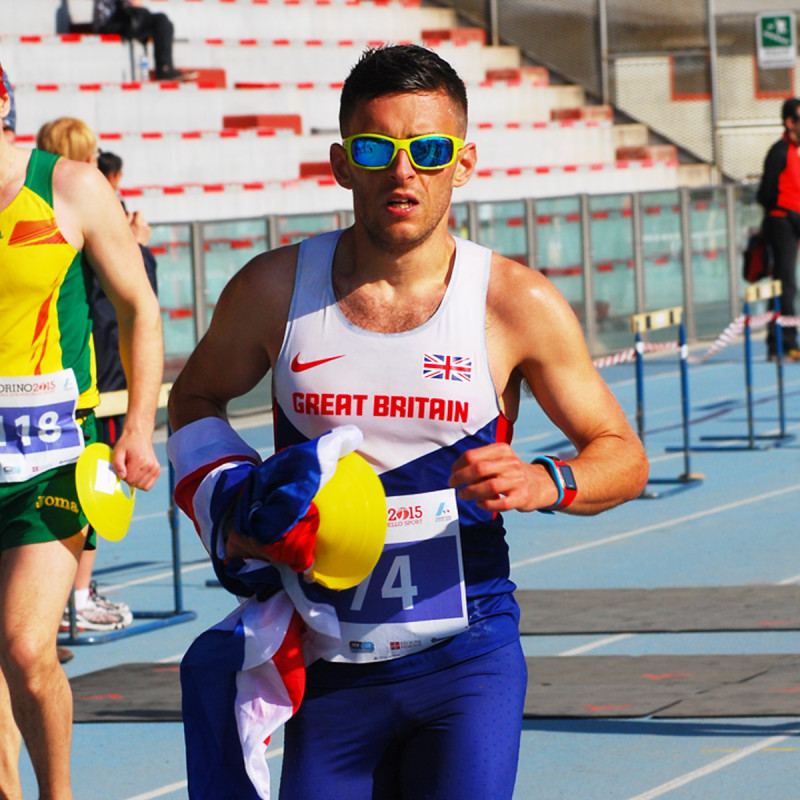


Robbie's headline numbers
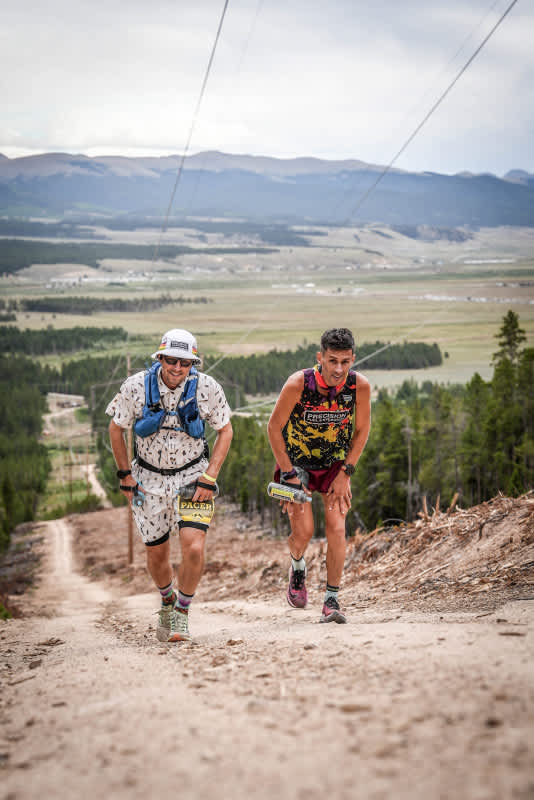
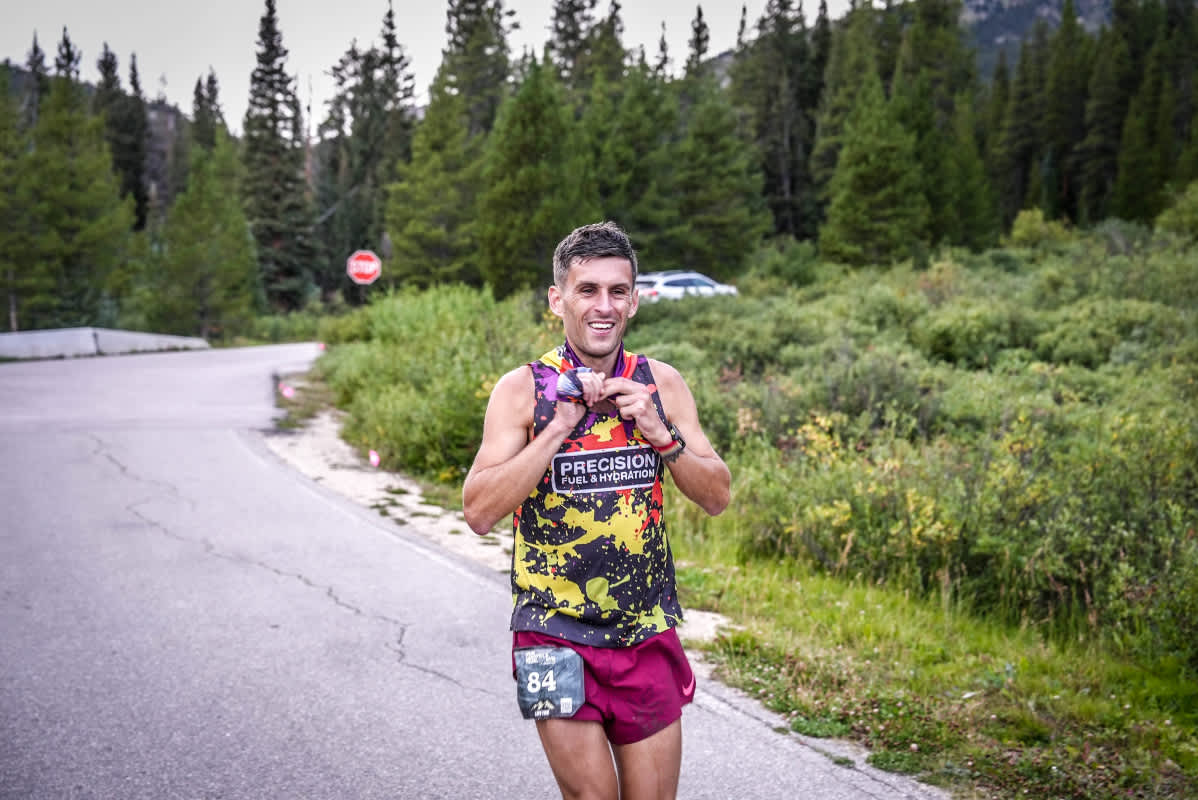
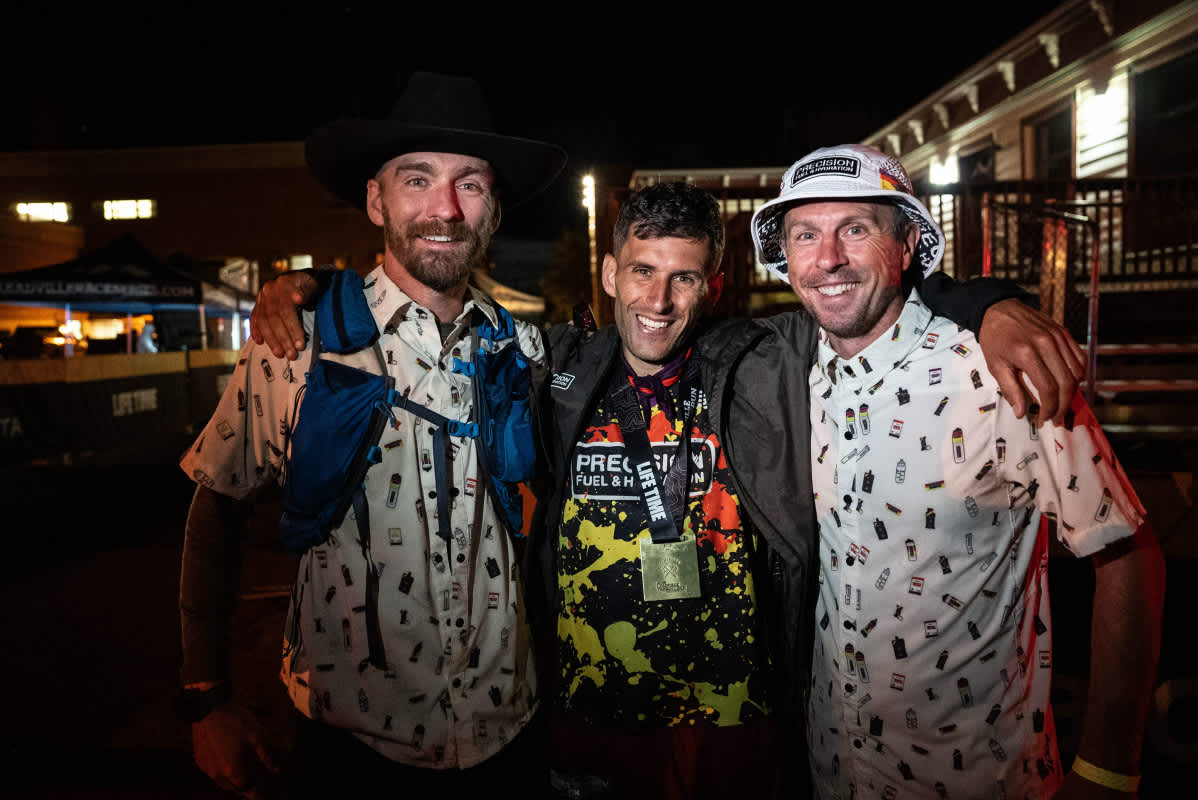

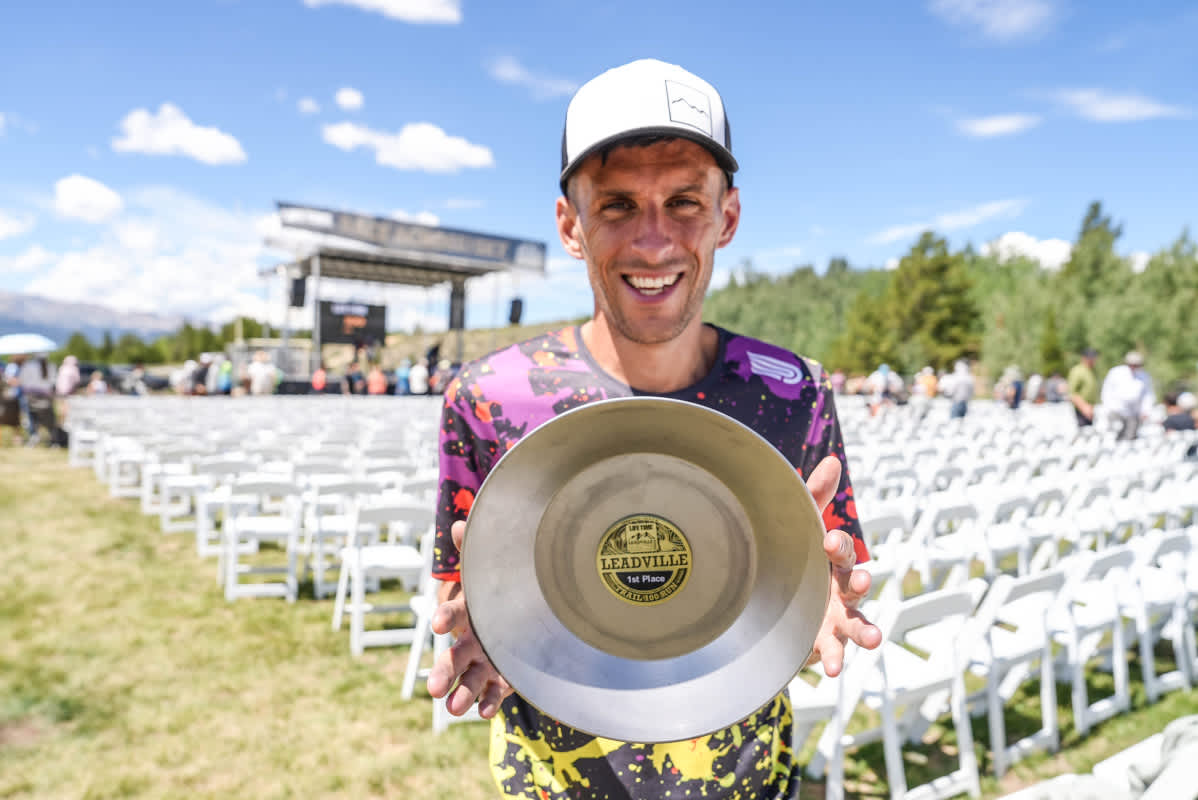
Robbie's strategy
Fueling
T - 1-4hrs: Ate a carb rich meal (Low in fat & fibre)
T - 15mins: Took in a final dose of carb
"I aimed for around 100 grams of carb per hour, and I think I hit this for a decent amount of the race. I got quite bloated in the second half so I backed off the carbs for a bit but still managed to keep myself moving pretty well."
Experienced ultra-runner, Robbie, has tried and tested his fueling plan numerous times, but it was put to the test in extreme conditions in Leadville as the course began at an altitude of ~10,200ft (3,000m), and climbed ~12,000ft (3,600m) throughout the 100 miles (161km). PF&H Sports Scientist, Minty, was tracking Robbie’s intake closely throughout the race as he crewed him, and saw his average intake stable at ~110g/h for the first nine hours, showing his prior gut training clearly paying off. From there on, however, Robbie decided to ‘decouple’ his carb and fluid intake to alleviate some unexpected and intense stomach discomfort. This took a long time, and his carb intake fell significantly in the final hours of the race. He still averaged within the recommended amount for a race of this nature, but we’ll likely see him average ~100g/h in future 100 milers as he’s done previously en route to the British 24-hour record in Italy in 2023.
Hydration
Taking on board an appropriate amount of fluid and sodium is essential to maintaining blood volume and supporting the cardiovascular effort needed to perform on race day.
Whilst the absolute amount of sodium and fluid consumed per hour is important, it’s critical to consider these in relation to each other. This is known as 'relative sodium concentration' and it’s expressed in milligrams per litre (mg/L). How much sodium you’re taking in per litre of fluid is more important than the absolute amount taken in per hour.
Robbie1044mg/L
Robbie has been Sweat Tested to dial in his hydration plan
Sweat sodium concentration (mg/L) is largely genetically determined and remains relatively stable. Knowing how salty your sweat is enables you to replace a good proportion of your sweat losses, which can range from 200-2,000mg/L.
Whilst Robbie's losses are on the moderate side, getting his hydration strategy right is still crucial when it's hot and/or humid as his higher sweat rate in these conditions can result in significant net losses over the duration of a race.
Learn moreT - 60mins: Drank ~500ml of strong electrolyte drink
"I was sweating quite a lot, but I never felt too thirsty. I ran out of drinks a couple of times so it must have been hot, but I never felt dehydrated."
Robbie got the majority of his electrolyte intake from PF Carb & Electrolyte Drink Mix, which comes with a very similar concentration of sodium to his sweat. This worked very well until he began to ‘decouple’ his carb and fluid intake, and whilst some of his bottles then contained PH 1000 (Drink Mix), he also drank ~2L of plain water to reduce his stomach discomfort, which dropped his average concentration slightly. Robbie kept a lid on his core temperature by picking up ice from every crewed aid station and paced the event very well to avoid overheating or overexerting himself at any point.
Caffeine
Beyond the Three Levers of Performance (carb, sodium and fluid), caffeine is one of only a few substances that is proven to improve performance for most endurance athletes as it can help stave off mental and physical fatigue.
T - 0-4hrs: Had a final hit of caffeine
Robbie took a decent dose of caffeine pre-race, introducing ~180mg into his bloodstream before toeing the start line. He then topped up his circulating levels in the second half of the race to ensure he was always reaping the associated ergogenic benefits. Robbie’s mid-race dose fell just within the scientifically recommended amount, but he would likely have taken some more in the final hours if he wasn’t experiencing any GI discomfort.
How Robbie hit his numbers
Here's everything that Robbie ate and drank on the day...
Final thoughts
“I’m pleased with my first crack at Leadville, I had to adjust my plan on the fly but managed to get enough carb, fluid and sodium in to get me through to the finish line.”
Robbie“Robbie’s debut at the infamous Leadville 100 was as brutal as he expected, with the topography, altitude and temperatures all playing significant roles. He listened to his body and adapted his nutrition strategy mid-race to reduce liquid carbs and overall carb intake to limit the discomfort he was experiencing. Robbie put this discomfort down to some prior stomach upset before the race, although the altitude and high temperatures at points may have added to this distress.”
 PF&H
PF&HRobbie's full stats
Data Confidence
We rate each of our case studies from 1-5 based on the level of accuracy, and our confidence in the data.
There is good confidence in the accuracy of the data reported. An athlete feels that the numbers closely reflect what they consumed despite a couple of estimations which may carry some degree of error. The majority of what was consumed is recorded to a high level of specificity (most volumes are known through the use of bottles brands quantities flavours). The numbers are very plausible and align with previous data recordings (if an athlete has collected data previously).