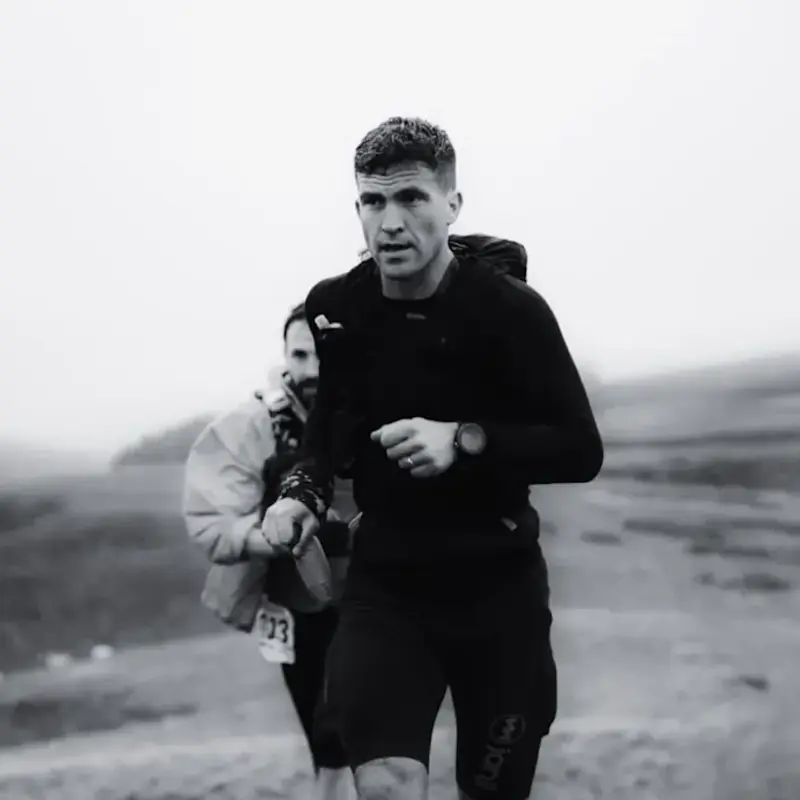
Sam Skinner

The Cheviot Goat

Sam's headline numbers
Sam's strategy
Fueling
Carbohydrate is the main fuel you burn when racing. Failing to fuel properly is a leading cause of underperformance in longer races.
Sam executed a simple but militant fueling strategy to take the win at The Cheviot Goat winter ultra race. He went into the event with 12 pre-made Flow Flask 120s packing 120g of carbohydrate from PF 300 Flow Gel in each. He consumed one of these every hour for the 12 hours he was racing with only 50g left in his final flask! This is an incredible example of disciplined fueling and it supported his energy levels to push hard right through to the finish. At the mile 25 bag drop, Sam consumed two rice pudding pots to incorporate some real food and different flavours; he also picked up a litre of cola which delivered additional carbs and a bit of caffeine. Consuming such a high carb intake with no GI issues is a testament to Sam’s gut training and while intakes over 90g/h aren’t suitable for every athlete, it certainly supported Sam’s high intensity effort all the way to victory.
Hydration
Taking on board an appropriate amount of fluid and sodium is essential to maintaining blood volume and supporting the cardiovascular effort needed to perform on race day.
Whilst the absolute amount of sodium and fluid consumed per hour is important, it’s critical to consider these in relation to each other. This is known as 'relative sodium concentration' and it’s expressed in milligrams per litre (mg/L). How much sodium you’re taking in per litre of fluid is more important than the absolute amount taken in per hour.
Sweat sodium concentration (mg/L) is largely genetically determined and remains relatively stable. Knowing how salty your sweat is enables you to replace a good proportion of your sweat losses, which can range from 200-2,000mg/L.
Whilst Sam’s losses are on the moderate side, getting his hydration strategy right is still important if he wants to perform at his best.
Learn moreWhile Sam’s hydration numbers overall were on target and appropriate for the race, there is still room to optimise this part of his strategy further. Sam could preload more effectively ahead of future ultras to aid water retention and increase blood plasma volume, such as by having three Electrolyte Capsules or one tablet of PH 1500 with 500ml of water the night before and morning of the race. Sam’s fluid consumption fell within the recommended intake for the cool conditions but he reported feeling thirsty and running out of water at times. Therefore, he should undergo some sweat rate testing to gain a better understanding of what he needs to replace a greater proportion of his fluid losses and avoid accumulating excessive dehydration. Sam’s use of Electrolyte Capsules resulted in an almost perfect replacement of his individual sodium losses; to maintain this if he increases his fluid intake in future races, he needs to increase the number of capsules he consumes to keep his sodium and fluid balanced, aligning with his sweat sodium concentration.
Caffeine
Beyond the Three Levers of Performance (carb, sodium and fluid), caffeine is one of only a few substances that is proven to improve performance for most endurance athletes as it can help stave off mental and physical fatigue.
Sam delayed his first caffeine intake until halfway through the race when he began to use berry flavoured caffeine tablets in his PF 300 Flow Gel to provide him with six 100mg doses and help to prevent flavour fatigue. These caffeine doses will have helped to reduce his perception of fatigue into the latter stages of the race and increase his concentration as it got dark. In future, Sam could consider having a higher first dose of the stimulant so his blood caffeine level would rise into the 3-6mg/kg sweet spot faster so he can reap the benefits from the stimulant for longer.
How Sam hit his numbers
Here's everything that Sam ate and drank on the day...
Sam's weapons of choice
Final thoughts
Sam PF&H
PF&HSam's full stats
Data Confidence?
There is good confidence in the accuracy of the data reported. An athlete feels that the numbers closely reflect what they consumed despite a couple of estimations which may carry some degree of error. The majority of what was consumed is recorded to a high level of specificity (most volumes are known through the use of bottles brands quantities flavours). The numbers are very plausible and align with previous data recordings (if an athlete has collected data previously).