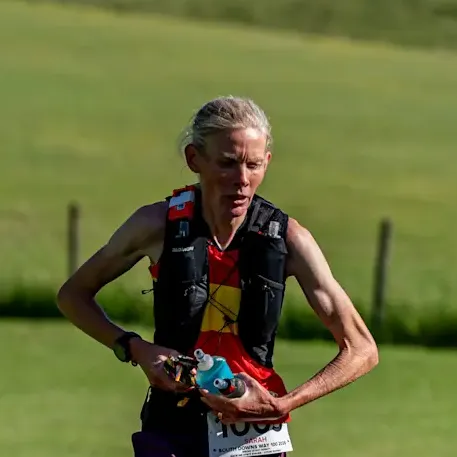
Sarah Webster
South Downs Way 100
 Winchester1st
Sarah's headline numbers
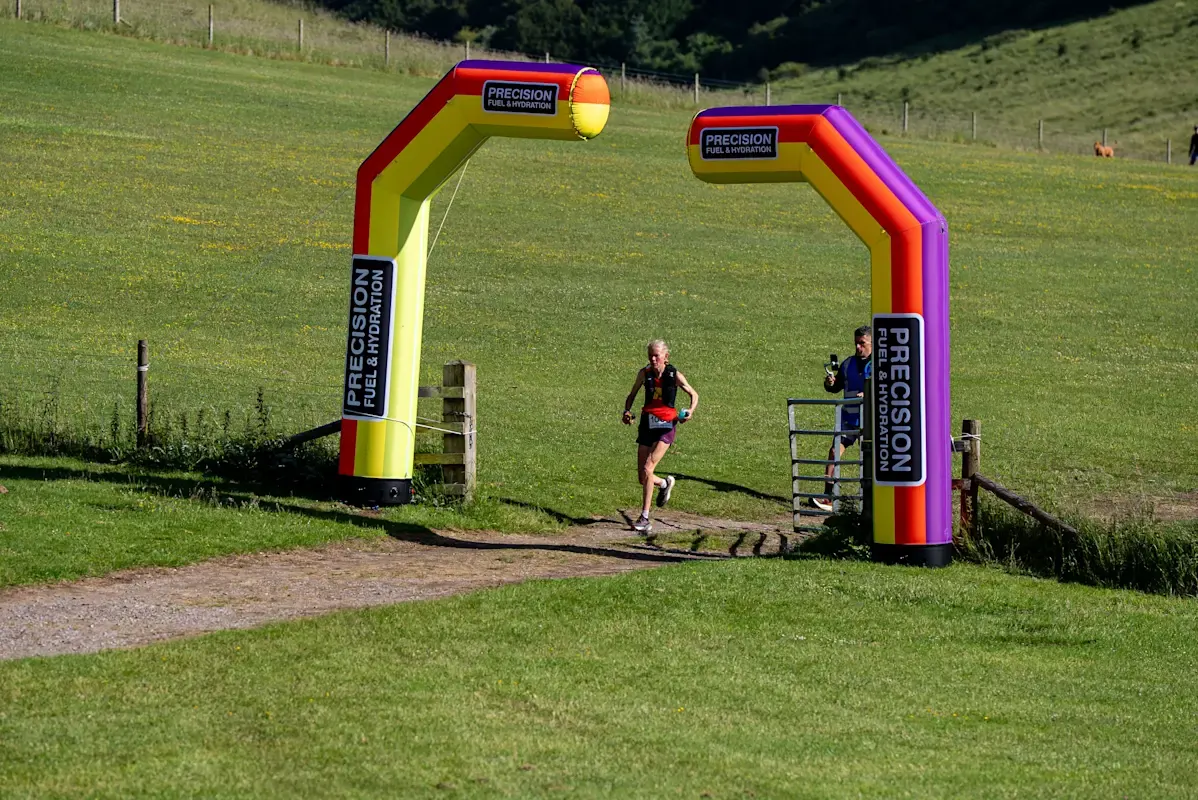
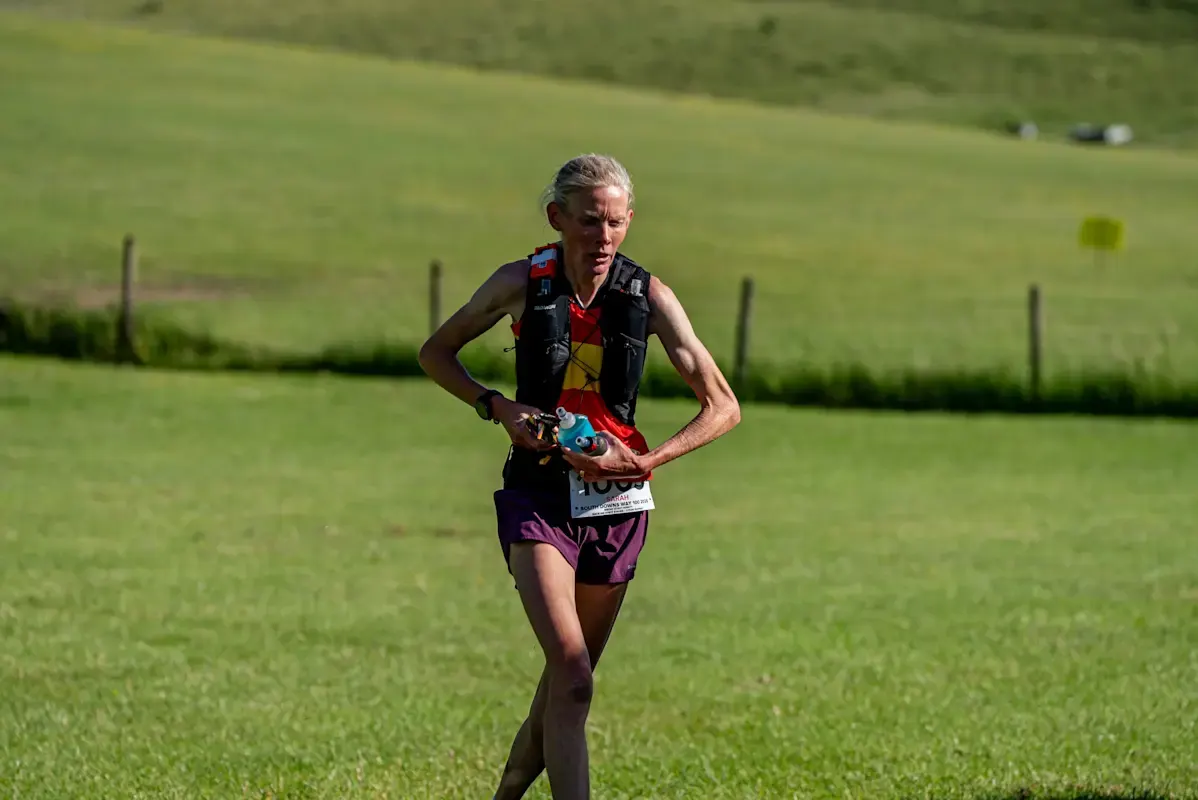
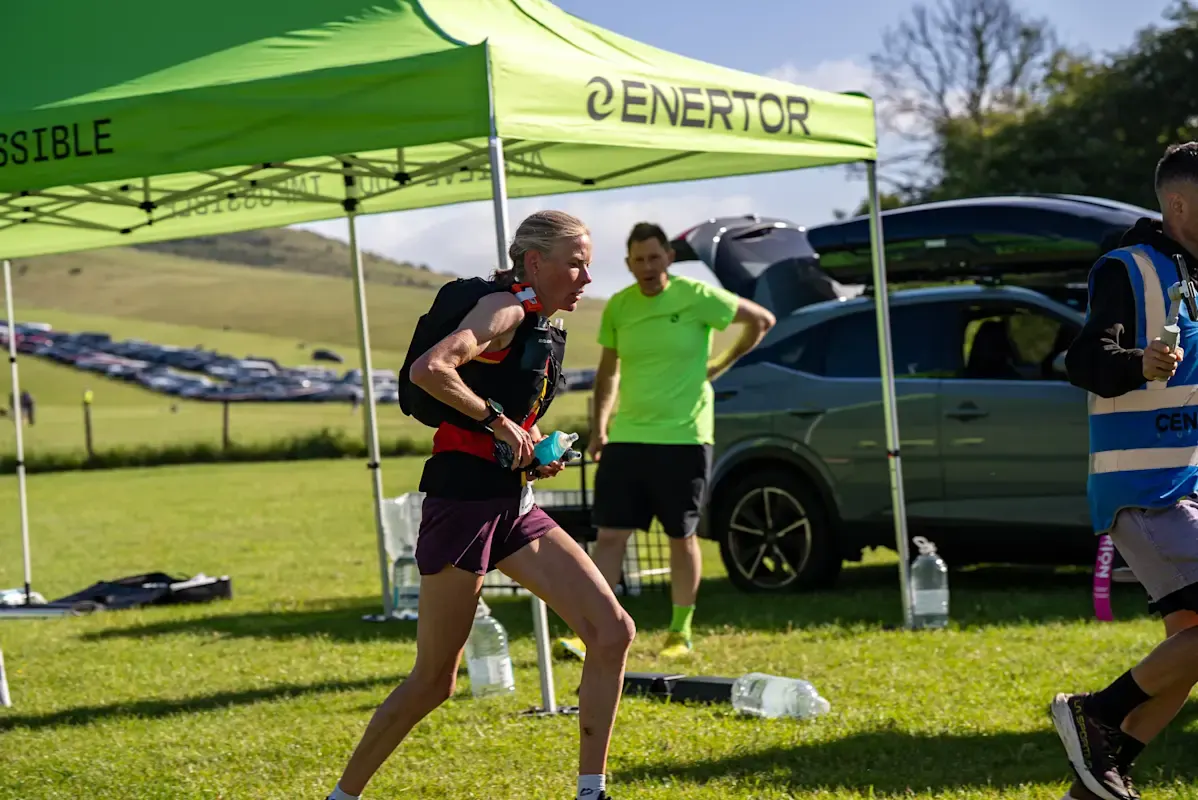
Sarah's strategy
Fueling
T - 1-4hrs: Ate a carb rich meal (Low in fat & fibre)
Sarah would benefit from taking in a final dose of carb <30 minutes before
"I feel like I had the energy to go faster than my legs were actually able to go."
Sarah, who holds the world record for the furthest distance run around a track in 24 hours by a female, smashed the British 100-mile record to win the South Downs Way 100 in blistering time of 14:27:34. To support her energy levels throughout the race, Sarah adopted a very simple fueling strategy. She set an alarm on her watch for every 30 minutes as a reminder to have a PF 30 Gel, or on three occasions a PF 30 Caffeine Gel. During her 24-hour world record, Sarah leaned more heavily on real foods whereas this time, despite having other foods as options, she decided to stick to gels for efficiency and ease. This demonstrates how fueling strategies should be adapted to the needs of each individual race and how with consistent gut training, gels can be tolerated over prolonged durations. As she builds to the World 100km Championships in September, Sarah could look to increase her carb intake towards 90g/h in order to support the greater intensity of that race.
Hydration
Taking on board an appropriate amount of fluid and sodium is essential to maintaining blood volume and supporting the cardiovascular effort needed to perform on race day.
Whilst the absolute amount of sodium and fluid consumed per hour is important, it’s critical to consider these in relation to each other. This is known as 'relative sodium concentration' and it’s expressed in milligrams per litre (mg/L). How much sodium you’re taking in per litre of fluid is more important than the absolute amount taken in per hour.
Sarah962mg/L
Sarah has been Sweat Tested to dial in her hydration plan
Sweat sodium concentration (mg/L) is largely genetically determined and remains relatively stable. Knowing how salty your sweat is enables you to replace a good proportion of your sweat losses, which can range from 200-2,000mg/L.
Whilst Sarah's losses are on the moderate side, getting her hydration strategy right is still important if she wants to perform at her best.
Learn moreDrinking a strong electrolyte drink before the race could have helped Sarah start optimally hydrated
"I definitely didn’t drink enough early on and whilst I think the cramps I experienced were mainly a pacing issue, dehydration may have played into it."
Preloading with 500ml of PH 1500 the night before and morning of an endurance event ensures you start optimally hydrated; this is a protocol Sarah would benefit from adding to her pre-race routine. Sarah carried two Flow Flask 120s throughout, one filled with PH 1000 and the other with water; during the first three hours she only drank the PH 1000 flask which would have provided ~250ml per hour, likely a lot lower than her sweat rate and therefore causing dehydration to accumulate. When the temperature started to rise, Sarah drank both flasks each hour. Whilst this fluid intake was more appropriate, the relative sodium concentration of her drinks averaged out to ~679mg/L which is ~300mg/L below her sweat sodium concentration of 962mg/L. Sarah experienced cramping from ~50 miles to ~75 miles; she attributed them mainly to her pacing but cramps are multifactorial, and she recognised that her fluid and sodium deficits would’ve accumulated by halfway and could’ve also been contributing. For future races, Sarah should do more sweat rate testing to dial in her fluid losses and therefore how much to drink per hour in different conditions, and aim to take on a relative sodium concentration of ~1,000mg/L to avoid symptoms of dehydration.
Caffeine
Beyond the Three Levers of Performance (carb, sodium and fluid), caffeine is one of only a few substances that is proven to improve performance for most endurance athletes as it can help stave off mental and physical fatigue.
Consuming caffeine in the hours before the start may have increased perceived energy levels
Caffeine provides ergogenic effects which are particularly useful during endurance events like this one as it can reduce perception of fatigue, allowing athletes to push harder when it gets really tough. Sarah used caffeine strategically during the South Downs Way 100, taking on three PF 30 Caffeine Gels. She spaced these caffeine doses out by having the gels at 4.5, 8.5 and 11.5 hours which meant the effects would have peaked when she needed them most towards the end of the 100 miles. Cola also contributed to Sarah’s caffeine intake, tipping her slightly above the recommended range of 3-6mg per kg bodyweight, but she tolerates caffeine well and going over the recommended dose isn’t uncommon for races of this length.
How Sarah hit her numbers
Here's everything that Sarah ate and drank on the day...
Final thoughts
“A runner is never fully satisfied. I think I could’ve paced it better, but I’m happy and it was a really fun race.”
Sarah“Sarah ran an incredible 100 miles in the South Downs, smashing the course record by over 2 hours! Her fueling strategy was simple and supported her to the end. With some small improvements to her hydration and pacing strategies, she will hopefully be able to continue to crush her future races, cramp free.”
 PF&H
PF&HSarah's full stats
Data Confidence
We rate each of our case studies from 1-5 based on the level of accuracy, and our confidence in the data.
There is some confidence in the quantities and brands of products consumed but the data may lack specifics (e.g. volumes specific flavours). A high number of estimations have been made and the room for error is moderate-high. There may also be the possibility that some intake has been grossly over- or under-estimated.